Termite Control & Deemak Treatment in DC Colony Gujranwala
Drill-and-inject perimeter barrier for established homes — root-vector control for boundary tree infestations. Trusted since 1982.
How is termite treatment done in an already-built house in DC Colony Gujranwala without breaking the floor?
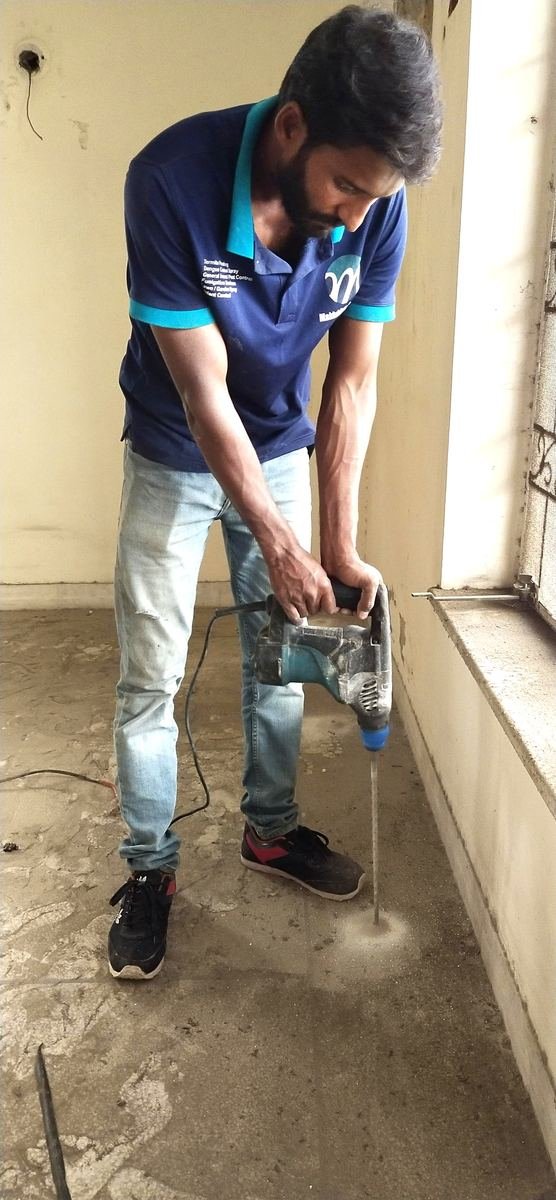
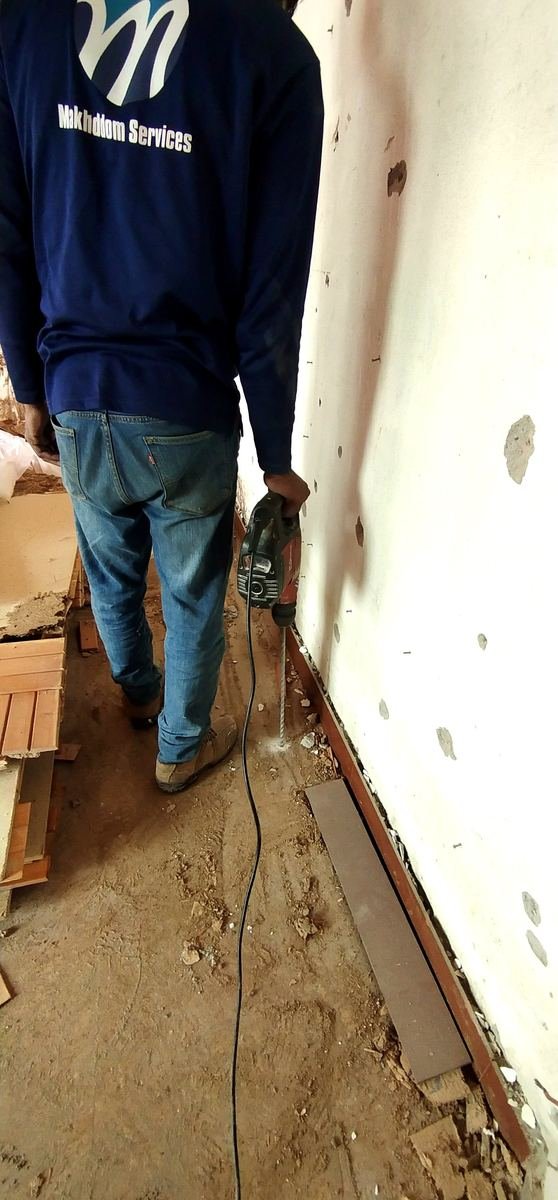
Existing DC Colony homes are treated with the drill-and-inject method: holes are bored along the skirting and plinth line at 12–18 inch spacing, then filled with termiticide under 20–25 PSI pressure so the barrier reaches the soil beneath the slab. Holes are sealed and barely visible afterward.
The drill-and-inject method exists precisely because a finished house offers no open trench to treat. Instead, the treatment targets the one place chemical can still reach the soil-slab interface: through the skirting and plinth band that runs around the building's perimeter and, where hollow block interior walls are confirmed, along interior partition skirtings as well. Injection pressure matters here — at 20–25 PSI, the termiticide is forced laterally through the soil beneath the slab rather than simply pooling in the drilled hole, which is what creates a continuous underground barrier rather than a series of disconnected treatment points.
Can ornamental garden trees near the boundary wall cause termite infestation in older DC Colony homes?
Yes. Mature ornamental trees such as ficus and eucalyptus, common along DC Colony boundary walls, develop root systems that travel under the wall footing, carrying soil moisture with them. These roots create a direct cellulose-rich pathway subterranean termites use to bypass the original foundation barrier and enter the house undetected.
This is a distinct risk pathway from anything seen on a new-construction plot. A root system large enough to cross under a boundary wall footing typically takes ten or more years to develop — which is exactly the age bracket most DC Colony homes now fall into. The root itself is not the food source; it is the bridge. Termites use the moist, shaded root channel as a protected tunnel that lets them travel from soil outside the property line to structural timber, skirting boards, or wooden furniture inside the house, entirely below ground and out of sight.
What is the cost of termite control for a 1 Kanal mansion in DC Colony Gujranwala?
A 1 Kanal DC Colony mansion needs full-perimeter drill-and-inject treatment plus targeted injection at boundary tree-root intrusion points, which affects price more than square footage alone. Makhdoom Services quotes 1 Kanal DC Colony jobs after a free on-site inspection mapping root entry points and hollow-wall risk zones.
Two 1 Kanal DC Colony homes can require meaningfully different treatment scope even at the same footprint: a plot with no mature boundary trees may need only a standard full-perimeter drill-and-inject pass, while a plot with an established ficus or eucalyptus along the wall line will need additional targeted injection at the confirmed root-intrusion point — sometimes requiring access from both the interior and exterior face of the affected wall.
Ground Conditions & Treatment Protocol
Mature Hollow-Brick Construction
Homes built in DC Colony 10 to 20 years ago commonly used hollow or perforated brick for internal partitions — standard practice for that construction era. Once a termite colony breaches a hollow block wall, the internal voids function as a ready-made tunnel network, allowing colonies to travel through a structure with almost no visible external evidence until damage is advanced.
Root-Vector Infestation Pathway
Boundary-line ornamental trees common to older posh colonies — ficus, eucalyptus, and similar deep-rooting species — develop root systems that cross under boundary wall footings over a 10–20 year period. These roots create a direct, moisture-carrying cellulose bridge that lets termites bypass a home's original perimeter barrier, which in any case has typically expired well before the 15–20 year mark, since construction-era barriers were not designed for multi-decade protection.
Drill-and-Inject Perimeter Protocol
- Full-perimeter survey — acoustic tapping along the external and, where relevant, internal skirting line to identify hollow sections, plus a visual check for mud tubes or existing timber damage.
- Drilling — holes bored at specified spacing along the full external skirting/plinth band and any confirmed hollow-block interior walls.
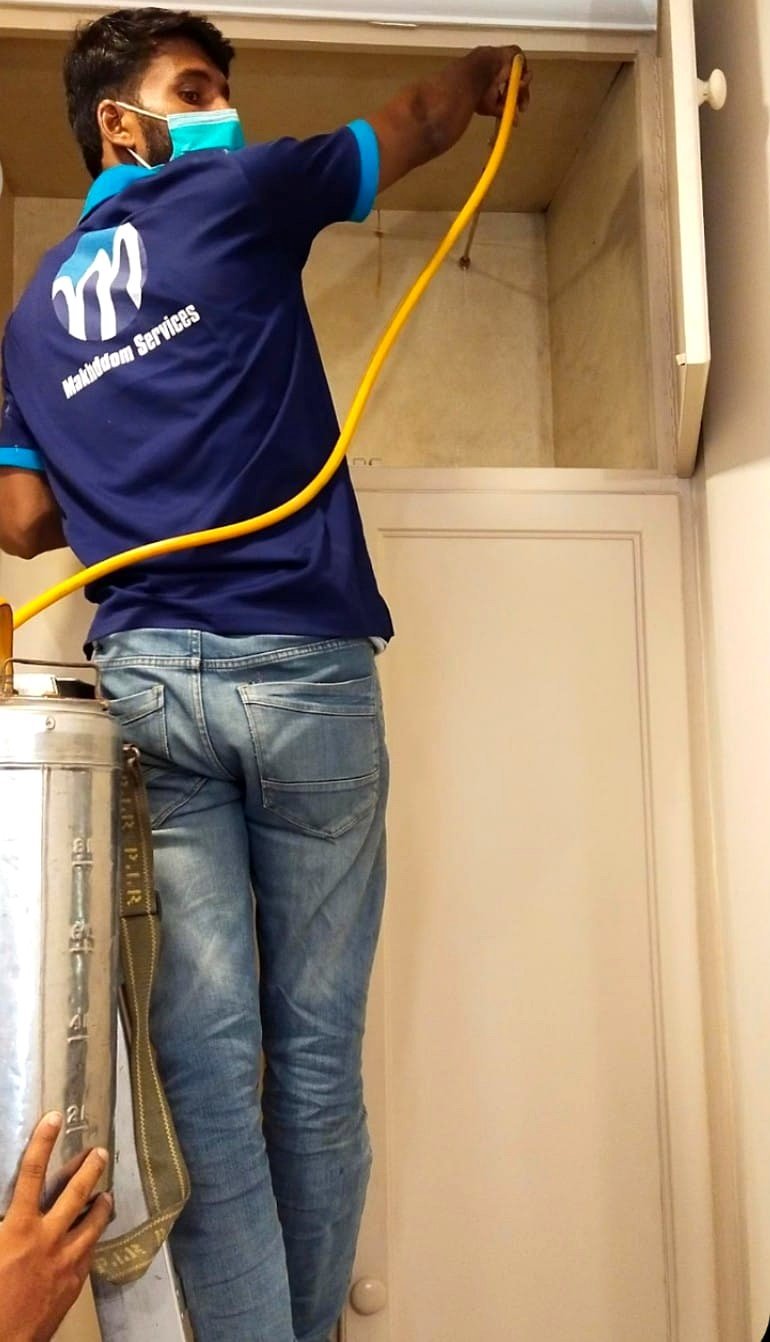
- Injection — termiticide delivered under 20–25 PSI to reach the soil-slab interface beneath the skirting, not just the drilled hole itself.
- Root-intrusion spot treatment — a concentrated, higher-dose injection at any point where boundary tree roots are confirmed crossing under the wall footing.
- Hole sealing and guarantee registration — cosmetic sealing of all drill points, followed by written 5-year post-construction guarantee registration and a scheduled annual inspection.
Active Ingredient. Termisol 25 EC is used across every property size for full-perimeter drill-and-inject work and root-intrusion spot treatment, chosen for its non-repellent transfer effect — critical for eliminating an established colony that has been active in the structure for years, rather than simply repelling foragers at the point of injection.
Property Footprint & Treatment Specification
Warranty terms: Post-Construction Treatment (perimeter drill-and-inject on already-built structures, as detailed on this page) carries a 5-year written warranty. Pre-Construction Treatment (full-slab soil barrier before flooring) carries a 10-year written warranty.
| Property Footprint | Structural Risk Factor | Recommended Active Agent | Injection Depth & Spacing | Guaranteed Protection Period |
|---|---|---|---|---|
| 5 Marla | Moderate — aging plumbing penetrations, partial hollow-block walls | Termisol 25 EC (repellent perimeter barrier) | 8–10 inch depth, 15–18 inch spacing along skirting | 5-year written guarantee (post-construction) |
| 10 Marla | High — 10–20 year hollow-brick construction + boundary tree-root exposure | Termisol 25 EC (non-repellent, transfer-effect colony elimination) | 10–12 inch depth, 12–15 inch spacing, full perimeter drill-and-inject | 5-year written guarantee (post-construction) |
| 1 Kanal | Very High — mature root systems + extensive hollow load-bearing walls | Termisol 25 EC full perimeter + targeted root-intrusion injection | 12 inch depth, 12 inch spacing (tightened near root zones) | 5-year written guarantee (post-construction) |
Makhdoom Services DC Colony Gujranwala Field Log
Site: 15-year-old mansion (block reference withheld for client privacy)
Site Condition
Client reported a soft, hollow-sounding skirting near the front porch and fine mud-like residue along a column base. Inspection traced the source to a mature ficus tree just outside the boundary wall — its root system had grown under the wall footing and made direct contact with the porch column foundation, well outside the coverage area of any original construction-era barrier (which, at 15 years old, had also expired).
Action Taken
Full perimeter drill-and-inject treatment along the entire plinth line at 12-inch spacing using Termisol 25 EC, with a concentrated spot injection directly at the confirmed root-intrusion point beneath the porch column to cut off the colony's access path at its source.
Outcome
No fresh mud-tube activity at the 90-day recheck. Client advised to maintain a physical or chemical root barrier if replanting ornamental trees within 6 feet of the boundary wall in future.
Get a Free DC Colony Gujranwala Termite Inspection
Drill-and-inject treatment with Termisol 25 EC, no floor breakage — 5-year written guarantee on post-construction treatment. Trusted since 1982.
See our full Gujranwala termite control coverage, or read our micro-market guide for termite control in Citi Housing Gujranwala.