Industrial Epoxy Flooring Lahore — Built for Factories & Warehouses
Industrial Epoxy Flooring Lahore: Makhdoom Services installs 100% solids and self-leveling epoxy flooring systems engineered for forklift traffic, chemical exposure, and continuous industrial use. On-site assessment (Rs 2,000, refunded/adjusted if you book the job with us) — custom quotation based on your facility's load, traffic, and chemical exposure profile.
Solids Epoxy Systems
PSI Compressive Strength
Cure to Full Traffic
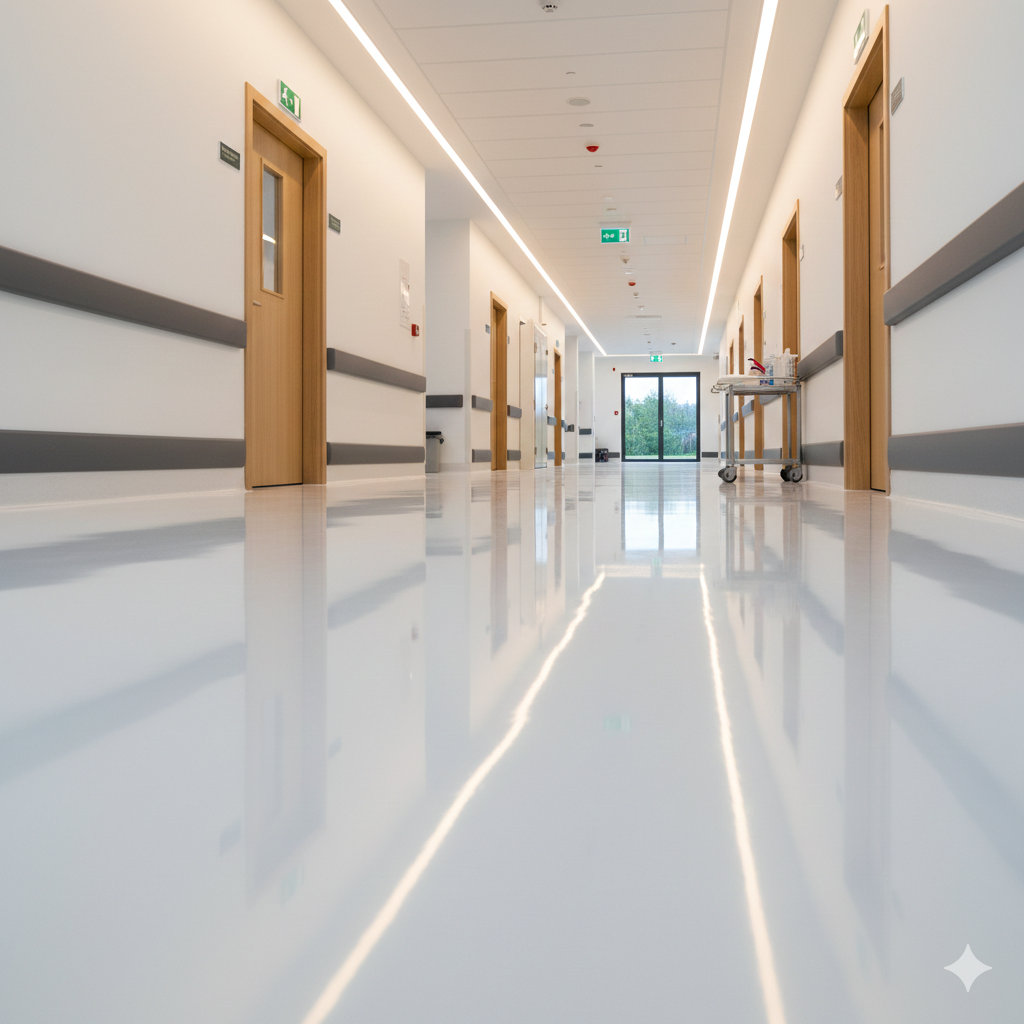
✅ 100% Solids Industrial Systems
✅ On-Site Assessment
✅ Forklift & Heavy Machinery Rated
✅ 11 Cities Across Punjab
Built for Forklift Traffic, Spills, and Round-the-Clock Operations
A correctly specified epoxy system outperforms bare concrete in load-bearing capacity, chemical resistance, and cleanability — reducing downtime and maintenance cost over the life of your facility. Already working with us on waterproofing or heat proofing? Ask about bundling epoxy flooring for your facility.
Heavy Load Bearing
100% solids systems cure to 10,000–14,000 psi compressive strength — engineered for forklifts, pallet jacks, and dragged machinery.
Chemical & Oil Resistant
Resists oils, fuels, hydraulic fluid, and most acids and alkalis — protecting the substrate from chemical attack and staining.
Seamless & Hygienic
Joint-free surface with no grout lines for dust or bacteria to collect — suitable for food-grade and pharmaceutical environments.
Minimal Downtime
Most systems return to light foot traffic in 12–24 hours and full vehicle traffic in 24–72 hours, minimizing production interruption.
The Right System for Your Facility
Each environment has a different load, chemical, and hygiene profile. We assess your facility on-site before recommending a system.
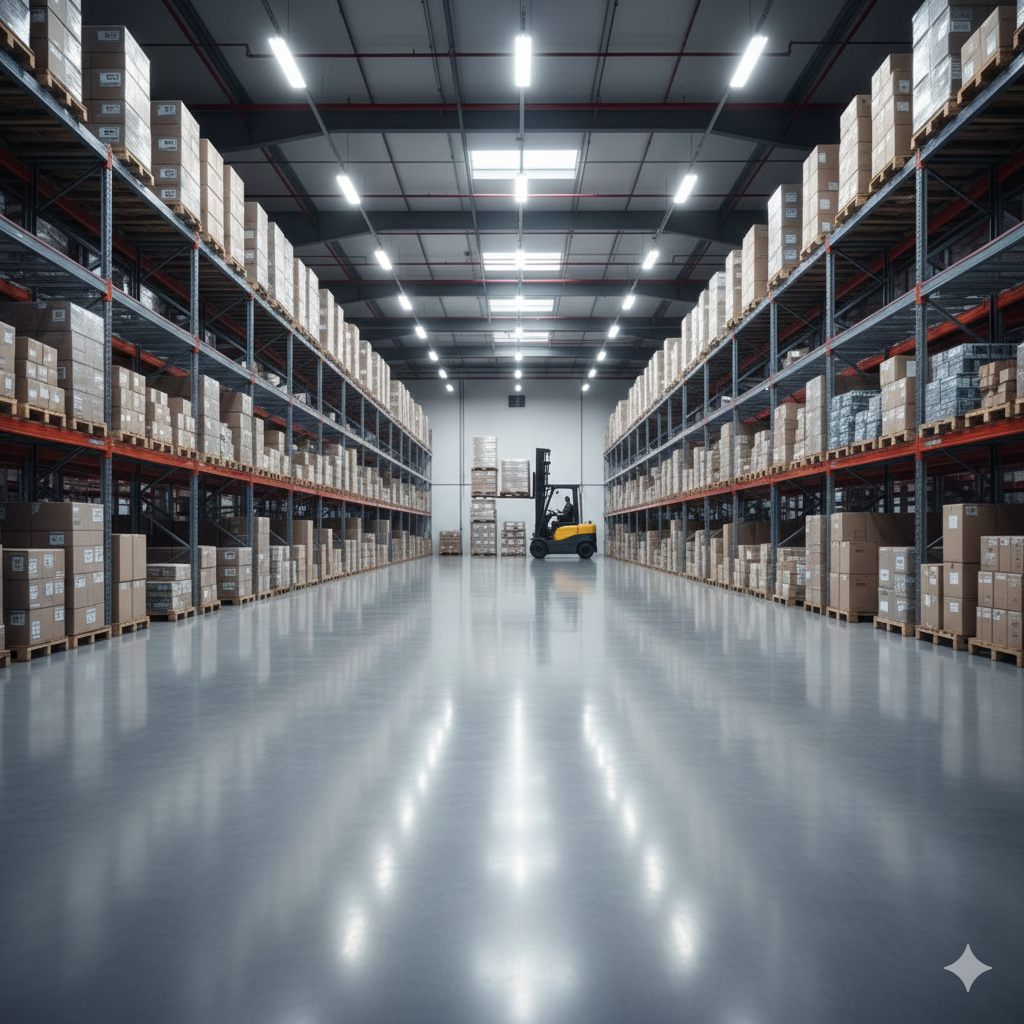
100% Solids Industrial Epoxy
Heavy-duty coating for general manufacturing, warehouses, and distribution centers.
- Near-zero VOC — safe for occupied facilities
- 10–30 mil film build
- Forklift and pallet-jack rated
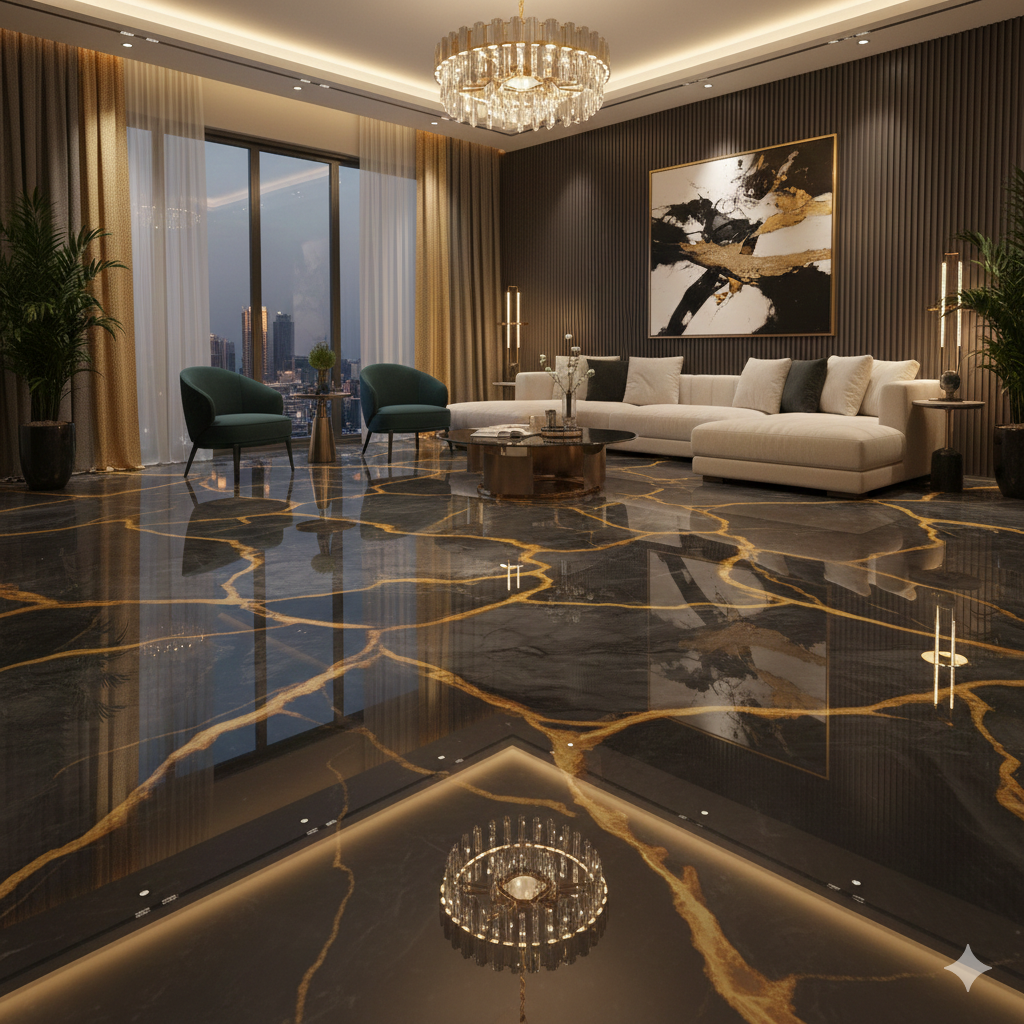
Self-Leveling Epoxy Mortar
High-build aggregate-filled system for the most demanding traffic and impact conditions.
- 30–125+ mil thickness
- Maximum impact & point-load resistance
- Repairs spalled or damaged concrete
Anti-Static (ESD) Epoxy
Conductive flooring system that safely dissipates static charge.
- For electronics, server rooms & labs
- Protects sensitive equipment
- Seamless, easy-clean finish
Hygienic Food-Grade Epoxy
Seamless, bacteria-resistant flooring for facilities requiring strict hygiene compliance.
- Coved base details available
- Thermal shock & steam-clean tolerant
- Suits HACCP / ISO 22000 environments
Decorative 3D & Metallic Epoxy
High-gloss, design-forward finish for showrooms, offices, and premium retail floors.
- Metallic, flake & custom 3D designs
- Mirror-finish topcoat
- Also suitable for premium residential
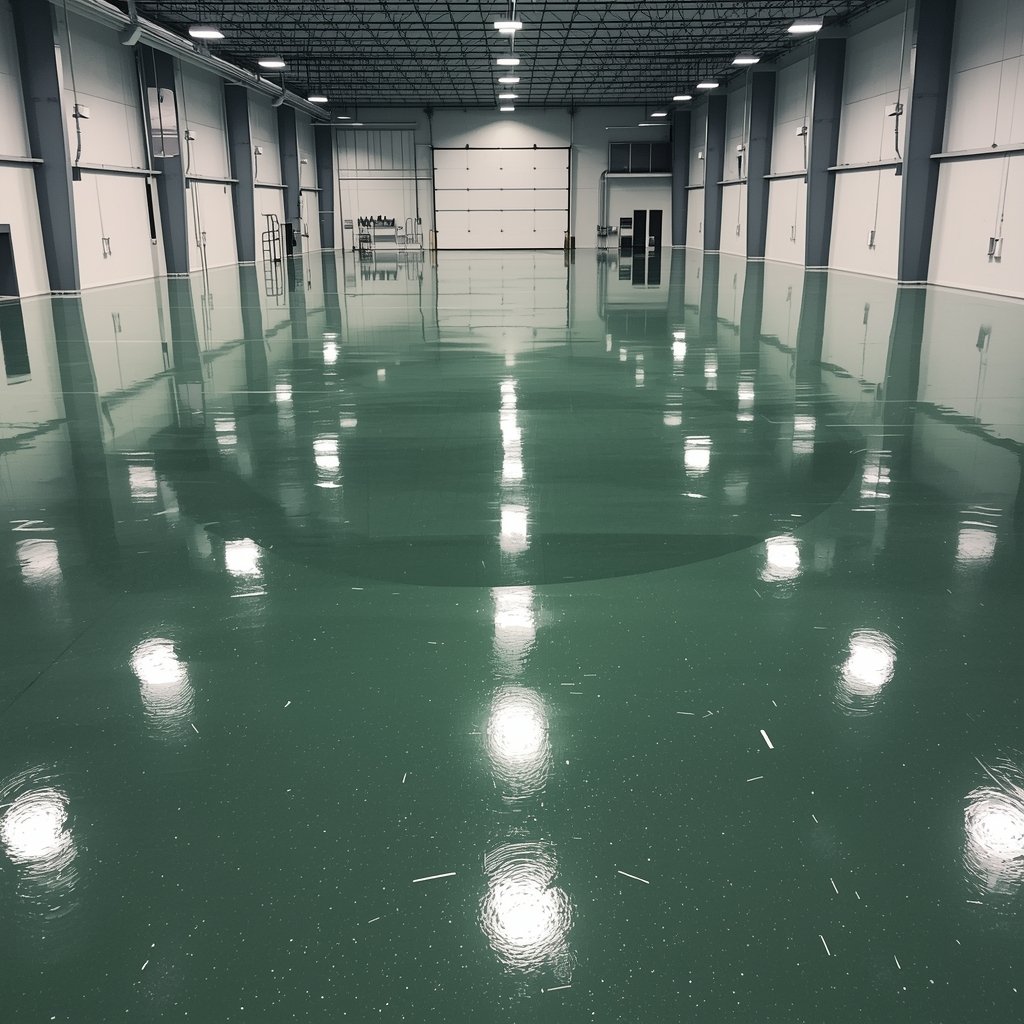
Concrete Repair & Resurfacing
Epoxy mortar resurfacing for old, cracked, or damaged concrete before topcoat application.
- Restores damaged substrates
- Avoids costly concrete replacement
- Diamond-ground surface preparation
Systems for Every Environment
From forklift-rated industrial halls to decorative showroom finishes, we install the right epoxy system for your space.
Industrial Epoxy
Heavy-duty seamless flooring for factories, warehouses and production halls, in glossy or matte finish. Forklift-rated systems built for load and chemical exposure.
Decorative Epoxy
Custom patterns and metallic textures applied over a base color — a striking, seamless finish for showrooms, offices and modern homes.
3D Epoxy
A realistic graphic sealed under a transparent epoxy layer with clear-coat finishing, creating stunning visual depth (ocean, beach and custom designs) for homes and commercial spaces.
Specialty Waterproof Coatings
Epoxy coating for swimming pools, fountains and planters — more durable than fiberglass, built to withstand constant water pressure and moisture.
Engineered Performance, Not Guesswork
General performance ranges for 100% solids industrial epoxy systems. Exact specification is confirmed after on-site assessment of load, chemical exposure, and substrate condition.
| Property | Typical Range |
|---|---|
| Compressive Strength | 10,000 – 14,000 psi |
| Tensile Strength | 6,000 – 8,000 psi |
| Film Thickness (Standard Industrial) | 10 – 30 mils (0.25–0.75 mm) |
| Film Thickness (Self-Leveling Mortar) | 30 – 125+ mils (0.75–3.2 mm) |
| VOC Content (100% Solids) | Near-zero |
| Light Foot Traffic | 12 – 24 hours after application |
| Full Vehicle / Heavy Traffic | 24 – 72 hours after application |
| Service Life | 8 – 15+ years with proper maintenance |
From Site Visit to Finished Floor
Site Assessment
We inspect load, traffic, chemical exposure & substrate condition.
Surface Preparation
Diamond grinding or shot-blasting to achieve correct surface profile.
Crack & Repair
Damaged or spalled concrete repaired before coating application.
Primer Coat
Penetrating primer applied to maximize adhesion to the substrate.
Body / Mortar Coat
Epoxy applied at the specified thickness for your load requirement.
Topcoat & Cure
Protective topcoat applied; floor cures to full traffic readiness.
Epoxy Flooring Across Punjab's Industrial Sector
Epoxy Flooring Questions, Answered
Why do industries choose epoxy over tiles or concrete?
Two reasons: hygiene and strength. Epoxy is seamless — no joints where dirt and bacteria collect, which is why pharmaceutical and food production halls require it. And it's built for load: forklifts and heavy machinery run on it without the cracking, wearing, and slipperiness that concrete, chips, and tile floors develop under industrial use.
What thickness of epoxy do I need?
It depends on the traffic. Walkways, corridors and homes: around 2mm. Driveways and warehouses with rack systems: 3mm. High-traffic production halls with hundreds of workers: 4–6mm to resist constant friction. Forklift zones, loading areas and pharma/food production halls: 6mm — which is also the practical maximum, since going thicker adds cost and crack risk without benefit. The right system is confirmed at your site assessment.
Can epoxy be applied over tiles, chips, or marble?
Yes — concrete is the ideal base, but epoxy can be applied over chips/terrazzo (after treating the joints), tiles (after grinding off the glaze and filling the joints so they don't show through), and marble or granite (after grinding and primer). Uneven floors are ground level first — epoxy pools in dips, which later causes cracks.
Why does epoxy sometimes fail or peel?
Almost always: moisture. Before any work, we test the floor with moisture meters. If your facility is near a canal, drain or water source, moisture and salt (kallar) rise from beneath the slab — and epoxy applied over moisture bubbles and peels. Where moisture exists, we first extract the salt with a specialized chemical treatment, a process that takes 20–48 hours. This preparation is the difference between epoxy that lasts and epoxy that fails.
What is the application process?
Floor inspection with moisture testing; moisture and salt extraction where needed (20–48 hours); grinding to level the surface; a hardener primer or scratch coat that seals the concrete's pores; then the epoxy poured as a single calculated application to your required thickness — self-leveling, worked with rollers to remove air bubbles, our team in spiked boots working systematically from one end to the exit.
How soon can the floor be used after application?
The surface begins hardening within 30–45 minutes, but that's only the top layer. Allow 24 hours before foot traffic, and 48–72 hours before forklifts, vehicles or heavy loading — 72 hours is the safest. Loading the floor early breaks the chemical bonding between epoxy and concrete, which is exactly what causes premature cracking.
How do I clean and maintain an epoxy floor?
Daily cleaning with any normal detergent or liquid cleaner is fine; for stubborn dirt, a pressure washer with detergent restores the original shine. Two things to avoid: acidic cleaners (they burn the glossy layer and discolor the floor) and dragging sharp or pointed metal-legged items (deep scratches). Smooth-wheeled forklifts, carts and trolleys cause no damage. Drying the floor after washing prevents water spots.
How long does epoxy flooring last?
It scales with the system: a heavier build such as a 6mm heavy-industrial floor is designed for longer service life than a standard 2–3mm floor, provided the surface is prepared properly and the floor is maintained. We inspect the floor first, prepare the surface thoroughly and apply every coat to specification, and the system is documented in your written quotation.
What about the joints in industrial floors — epoxy or something else?
Epoxy Systems for Different Floors
Factories with forklift traffic need a thick, self-levelling coat, while showrooms and homes usually choose a decorative metallic or marble-effect finish. Our epoxy flooring services cover both, and we test the concrete for moisture before any coat goes down.
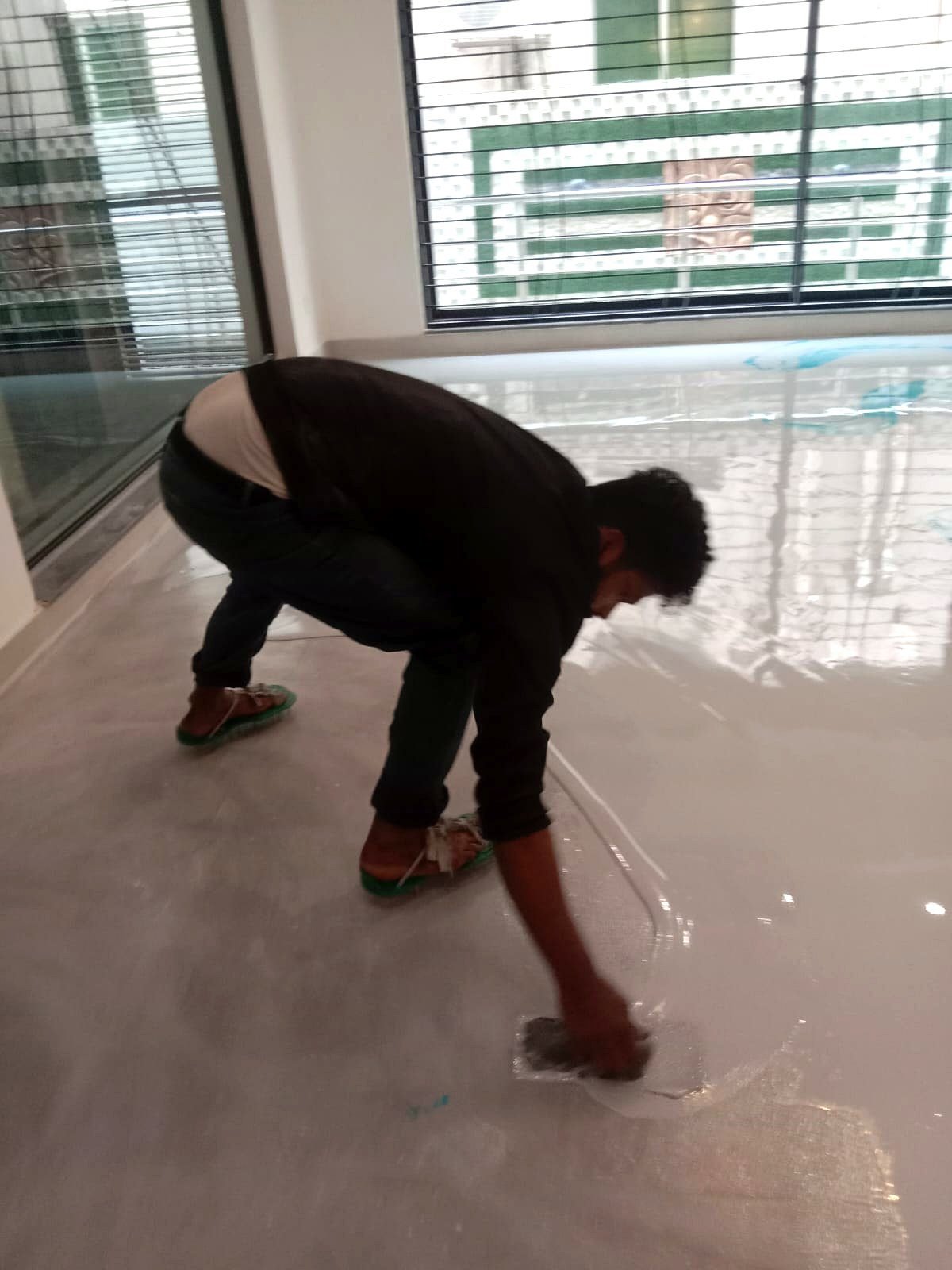
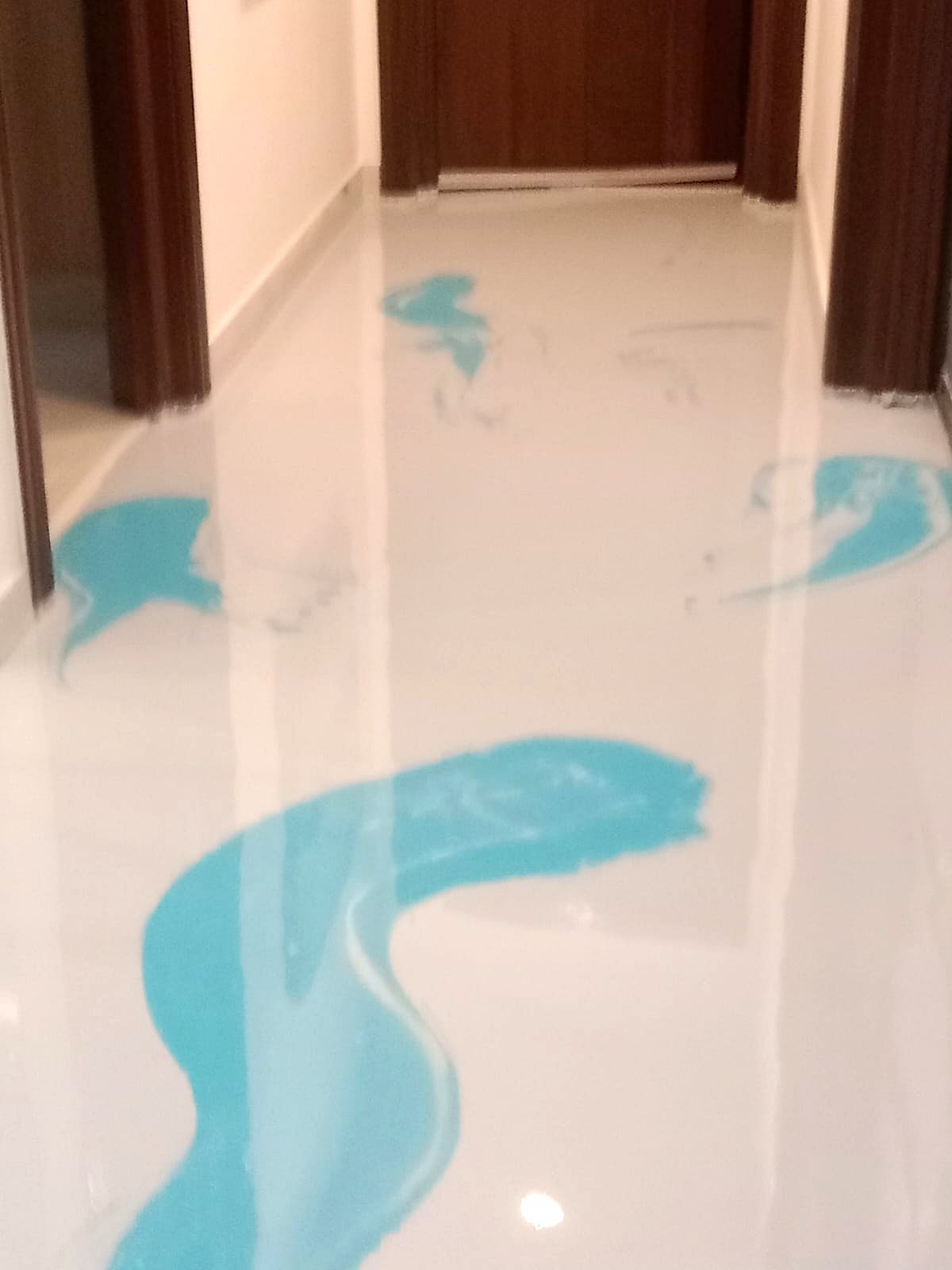
Cracks and joints are repaired first; see building crack filling for that work, or our epoxy flooring guide.
Request an On-Site Assessment — Industrial Epoxy Flooring Lahore
Our team will inspect your facility and prepare a custom quotation — no public pricing, no guesswork. Prefer to send details first? Visit our Contact page.
Epoxy Flooring in Islamabad & Rawalpindi — Our industrial epoxy and joint sealing teams also serve the twin cities: warehouses and industrial units in I-9, I-10 and the Rawalpindi industrial area, showrooms in Blue Area, and commercial facilities across Islamabad’s sectors. Projects are coordinated from our Lahore head office with site assessment available in Islamabad and Rawalpindi.
Also see: Waterproofing Islamabad and Heatproofing Islamabad.
Last Updated: July 2026