Roof waterproofing in Lahore is one of those jobs people only think about once the ceiling is already stained. By then the damage has usually spread further than the visible patch — water travels sideways through a slab before it drips, so the wet spot on your ceiling is rarely directly under the crack that caused it. Getting the roof sealed properly, before the next monsoon, is far cheaper and far less disruptive than chasing leaks room by room. If damp patches are already showing, our roof waterproofing service in Lahore starts with a site inspection and written quotation prior to job confirmation.
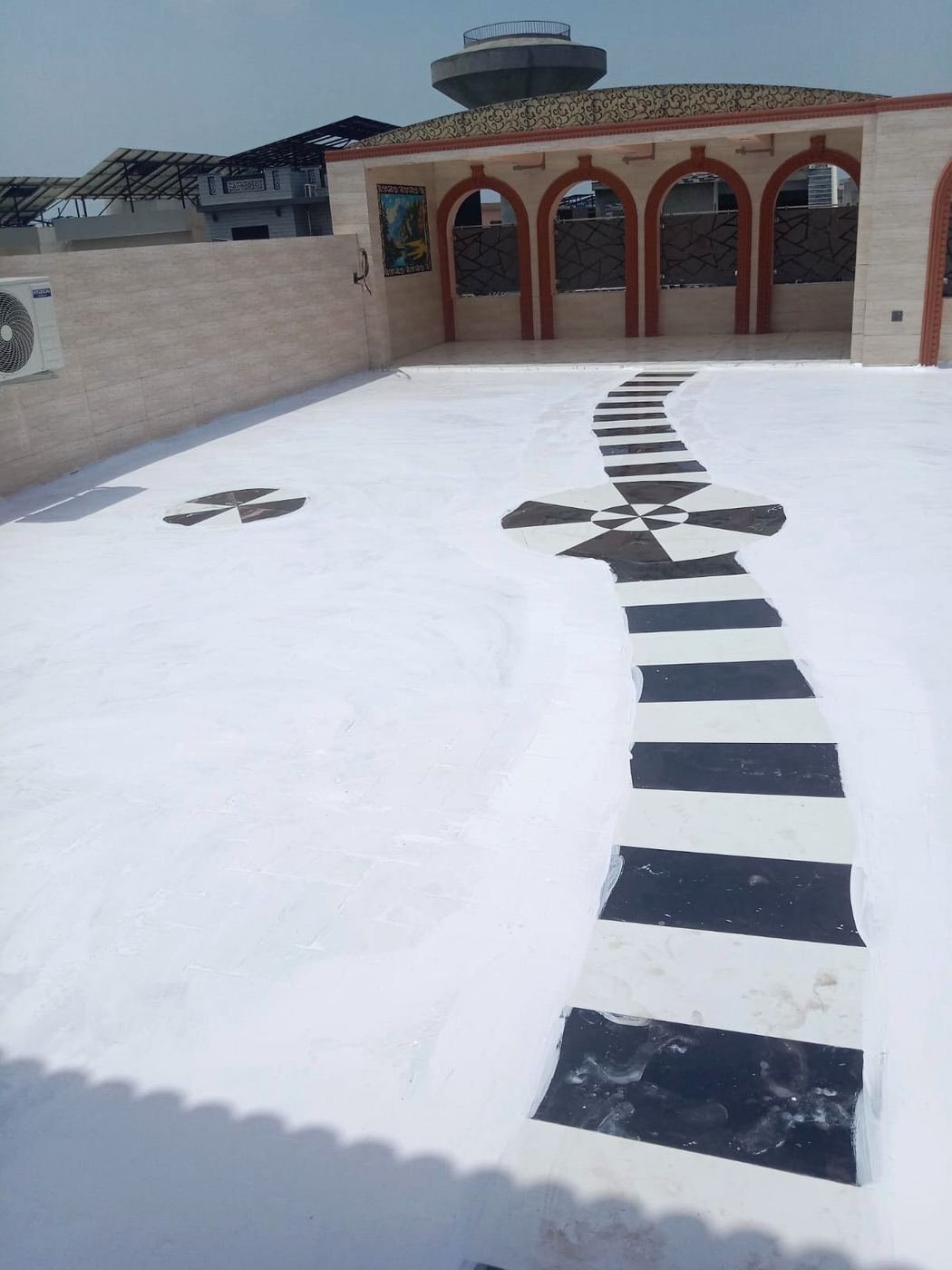
Why roof waterproofing in Lahore needs a different approach
Lahore roofs take punishment from two directions. In summer, surface temperatures on an exposed concrete slab climb far above air temperature, and that heat cycle expands and contracts the slab daily until hairline cracks open up. Then the monsoon arrives and drives water straight into those cracks. Most homes here also have flat or near-flat terraces rather than pitched roofs, so water sits instead of running off — and standing water is what turns a small crack into a leak.
This is why a coat of paint or a quick patch over a visible crack rarely holds. A durable job has to deal with the thermal movement, the standing water and the drainage, not just the hole.
Main roof waterproofing methods and what each is good for
There is no single best system — the right choice depends on your roof’s condition, whether the terrace gets walked on, and how much movement the slab sees.
- Bituminous membrane (torch-applied sheets): rolls of rubberised bitumen heat-bonded to the slab. Strong, thick and well proven on flat roofs; needs skilled application at overlaps and edges, which is exactly where cheap jobs fail.
- Liquid polyurethane coating: applied as a liquid that cures into one continuous seamless film. Very flexible, so it handles slab movement well, and there are no joints to fail. Sensitive to moisture in the slab at the time of application, so the surface must be genuinely dry.
- Acrylic coating: water-based, UV-resistant and the most budget-friendly of the coatings. Good for sound roofs that mainly need surface protection; less suited to roofs with active cracking or ponding.
- Cementitious systems: rigid cement-based coatings, excellent against water penetration and commonly used on water tanks, balconies and wet areas. Because they are rigid, they are less forgiving of a slab that flexes.
Surface preparation decides whether the job lasts
More waterproofing jobs fail from bad preparation than from bad materials. A coating applied over a dusty, damp or uneven slab simply will not bond, and it lifts within a season. Proper preparation means cleaning the surface down to sound concrete, opening and filling hairline cracks and expansion joints rather than coating over them, and giving particular attention to the points where water actually gets in: parapet junctions, drain outlets, and anywhere a pipe or duct penetrates the slab. These penetration points are the most common leak source on any flat roof.
Drainage and slope matter as much as the coating
Ponding is the enemy. Rainwater that sits on a terrace instead of draining accelerates deterioration of whatever system is underneath it, and almost every ponding failure traces back to inadequate slope or blocked outlets. Building practice generally calls for a minimum fall toward the drains so water clears on its own. If your roof holds puddles for days after rain, correcting the slope and clearing the outlets has to be part of the scope — otherwise you are paying to waterproof a pond.
How long should roof waterproofing last?
Industry figures vary widely by system and quality of installation. Liquid membranes are generally cited in the region of 10 to 15 years, while sheet membranes are typically quoted higher, often 15 to 25 years, with well-installed premium systems lasting longer still. Those numbers assume the work was done on a properly prepared surface and that the roof is inspected periodically. A twice-yearly look — before and after monsoon is the sensible rhythm in Lahore — catches blocked drains and small blisters while they are still cheap to fix.
What drives the cost of roof waterproofing in Lahore
Instead of a single figure, quotes move on a predictable set of variables. Understanding them lets you compare two proposals honestly:
- Roof area: priced per unit area, so the terrace size is the base of every quote.
- System chosen: membrane, polyurethane, acrylic and cementitious systems differ substantially in material cost and labour skill required.
- Existing condition: a slab with widespread cracking, old failed coating to strip, or active seepage needs remedial work before anything is applied.
- Slope correction and drainage work: if levelling screed or new outlets are needed, that is separate from the waterproofing itself.
- Detailing work: the number of parapets, pipe penetrations, stair blocks and water tanks on the roof adds labour, because every junction has to be treated individually.
- Warranty offered: a longer guarantee usually reflects a heavier specification and costs accordingly.
Waterproofing or heatproofing — which do you need?
They solve different problems and are often confused. Waterproofing stops water getting into the slab; heatproofing reduces how much heat the slab absorbs, which lowers indoor temperature and, as a side benefit, slows the thermal cracking that leads to leaks later. Many Lahore homeowners end up doing both, either as a combined system or in sequence. If your complaint is stains and seepage, start with waterproofing; if it is unbearable top-floor heat, look at roof heatproofing as well.
Frequently asked questions
When is the best time to waterproof a roof in Lahore?
Dry, moderate weather is ideal, because most systems need a dry slab and a stable curing window. That makes the pre-monsoon months and the post-monsoon dry spell the practical windows. Applying during or immediately after rain risks trapping moisture under the coating.
Can I waterproof over an old coating?
Sometimes, if the existing layer is fully bonded, compatible with the new system and in sound condition. If it is blistered, peeling or of unknown type, it should be stripped. Coating over a failing layer just means the new system fails with it.
My ceiling stain is in one corner — do I need the whole roof done?
Not always, but a spot repair is only sensible if the rest of the slab is genuinely sound. Because water tracks sideways before it appears, a proper inspection should establish whether you have one failed joint or a slab that has reached the end of its coating life.
Get professional roof waterproofing in Lahore
If your top floor shows damp patches, peeling paint or a musty smell after rain, the slab is already holding water and it will not improve on its own. Makhdoom Services carries out surface preparation, crack and joint treatment, drainage correction and membrane or coating application for homes and commercial buildings across the city. See our waterproofing services in Lahore to discuss the right system for your roof.