If you’re searching for reliable termite treatment in Lahore or anywhere across Punjab, you already know termites are not a rare problem — they are a seasonal certainty. Every year, as humidity rises before and during monsoon, subterranean termite colonies become more active, silently working through wooden furniture, door frames, roof timber, and even structural elements of homes and offices. By the time most property owners notice the damage, the colony has often been active for months, sometimes years.
If you live in Lahore, see our dedicated termite control Lahore page for local areas, warranty terms and booking.
This guide is written for homeowners, facility managers, and business owners across Lahore and Punjab who want a clear, honest, and practical understanding of termite treatment — what causes infestations, how to spot them early, how modern termiticides like Fipronil actually work, and how to choose the right treatment for your property. We will also explain how Termisol, a Fipronil 2.5% EC termiticide used by Makhdoom Services, fits into a professional termite treatment program.
Why Termites Are a Serious Problem in Lahore and Punjab
Punjab’s climate creates near-ideal conditions for subterranean termites. Warm temperatures combined with monsoon humidity give termite colonies the moisture they need to thrive close to the soil line, right where most homes and commercial buildings have their foundations, wooden door frames, and skirting boards.
Older construction across Lahore and other Punjab cities often relies heavily on timber for doors, window frames, roof trusses, and furniture — all of which are attractive termite food sources. Termites don’t announce themselves. They travel through self-built mud tubes that shield them from light and predators, which means an infestation can spread through wall cavities and foundations for a long time before any wood damage becomes visible on the surface.
The financial risk is real: termite damage is one of the most common causes of costly structural and furniture repair worldwide, and unlike many other forms of property damage, it is rarely covered by standard insurance policies. This makes early detection and preventive treatment far more cost-effective than repair after the fact.
How to Identify a Termite Infestation (Signs & Symptoms)
Most termite infestations are discovered by accident — a homeowner leans on a door frame that crumbles, or notices a strange trail of mud along a wall. Here are the signs to actively look for, especially before and during monsoon season:
- Mud tubes: Thin, pencil-width tunnels made of soil and saliva running along foundations, walls, or pipes. These protect subterranean termites from light and dry air as they travel between the soil and their food source.
- Hollow-sounding wood: Termites eat wood from the inside out, leaving a thin outer layer intact. Tapping on door frames, skirting boards, or furniture that sounds hollow or papery is a strong warning sign.
- Discarded wings: Swarms of winged termites (called alates) emerge to start new colonies, usually after rain. Finding small, uniform discarded wings near windowsills or light fixtures is a classic early indicator.
- Frass (termite droppings): Drywood termites leave small, pellet-like droppings that resemble sawdust or coffee grounds near infested wood.
- Sagging doors and windows: As termites hollow out wooden frames, doors and windows may start sticking, sagging, or becoming difficult to close properly.
- Visible tunnels in damaged wood: If a piece of furniture or structural wood breaks and reveals maze-like tunnel patterns inside, termites are almost certainly the cause.
If you notice even one of these signs, it’s worth scheduling a professional inspection rather than waiting — subterranean termite colonies can contain hundreds of thousands of individuals and continue expanding undetected.
Types of Termites Common in Punjab
Most termite problems in Punjab’s homes and commercial buildings come from subterranean termites, which live in the soil and build mud tubes to reach wood sources above ground. These are the termites most commonly targeted by liquid soil treatments like Fipronil-based termiticides, because treating the soil around a structure cuts off their access route and exposes the colony to the treatment.
Drywood termites, which live entirely within the wood they consume without needing soil contact, are also found in some furniture and structural timber, though they are generally less common in the region than subterranean species. Correctly identifying which type of termite is present affects the treatment approach, which is why a proper inspection matters before any product is applied.
How Termite Treatments Work: Understanding Fipronil Technology
Not all termiticides work the same way, and understanding the difference helps explain why professional-grade, non-repellent products like Fipronil have become the global standard for termite control.
The Science: How Fipronil Affects Termites
Fipronil belongs to a chemical class called phenylpyrazoles. According to the National Pesticide Information Center (NPIC), a cooperative between Oregon State University and the U.S. EPA, fipronil works by disrupting the normal function of the central nervous system in insects. It interferes with the GABA-gated chloride channels in the insect’s nervous system, causing overstimulation that is lethal to the termite. Importantly, fipronil binds far more readily to insect nerve receptors than to those of mammals, which is why professionally applied, label-compliant treatments are considered low-risk for humans and pets when used correctly.
Why Non-Repellent Termiticides Outperform Older Repellent Products
Older-generation termiticides were “repellent” — termites could sense the chemical barrier and would simply tunnel around it, leaving the colony largely untouched. Fipronil-based products work differently. As global manufacturer BASF explains for its Termidor fipronil termiticide, the product is undetectable to termites, so they tunnel through treated soil without realizing it, continuing their normal behavior. This is the key to what the industry calls the “Transfer Effect.”
Here’s how it works in practice:
- A termite comes into contact with treated soil or wood during normal foraging.
- Because the product is non-repellent, the termite does not avoid it and picks up the active ingredient on its body.
- The termite returns to the colony and interacts with other termites through grooming and feeding — a natural behavior in termite colonies.
- The active ingredient transfers to nestmates, spreading through the colony over time.
- Over several weeks, this cascading transfer effect can eliminate the majority of the colony — not just the termites that made direct contact with the treatment.
This is fundamentally different from a “spray and kill on contact” approach. It’s a colony-elimination strategy, which is why professional soil and perimeter treatment is far more effective than spot-treating visible termite trails alone
Termisol: Fipronil 2.5% EC — Makhdoom Services’ Trusted Termiticide
Makhdoom Services uses Termisol, a Fipronil 2.5% EC (Emulsifiable Concentrate) termiticide, as part of our professional termite treatment program. Termisol is built on the same non-repellent, transfer-effect chemistry described above, positioned under the tagline “Ultimate Defence Against Termites.”
The EC (Emulsifiable Concentrate) formulation is diluted with water before application, allowing our trained technicians to apply it precisely along foundations, soil lines, entry points, and other termite access areas — the same targeted approach used in professional termite treatment programs worldwide. You can learn more about the product on our Termisol product page.
Because Termisol shares its active ingredient with globally recognized, multinational-manufactured fipronil termiticides, property owners get access to proven, research-backed pest control chemistry, applied by a team with over four decades of hands-on experience treating homes and industrial facilities across Punjab.
Professional vs. DIY Termite Treatment in Lahore — Which Is Right for You?
It’s tempting to buy a spray bottle and treat visible termite trails yourself, and for very minor, isolated wood-boring insect issues, that might offer temporary relief. But subterranean termite colonies are almost never fully addressed by DIY spot treatment, for a few practical reasons:
- Colonies are usually hidden. By the time termites are visible, the active nest is typically underground or deep within a wall cavity, inaccessible without proper equipment.
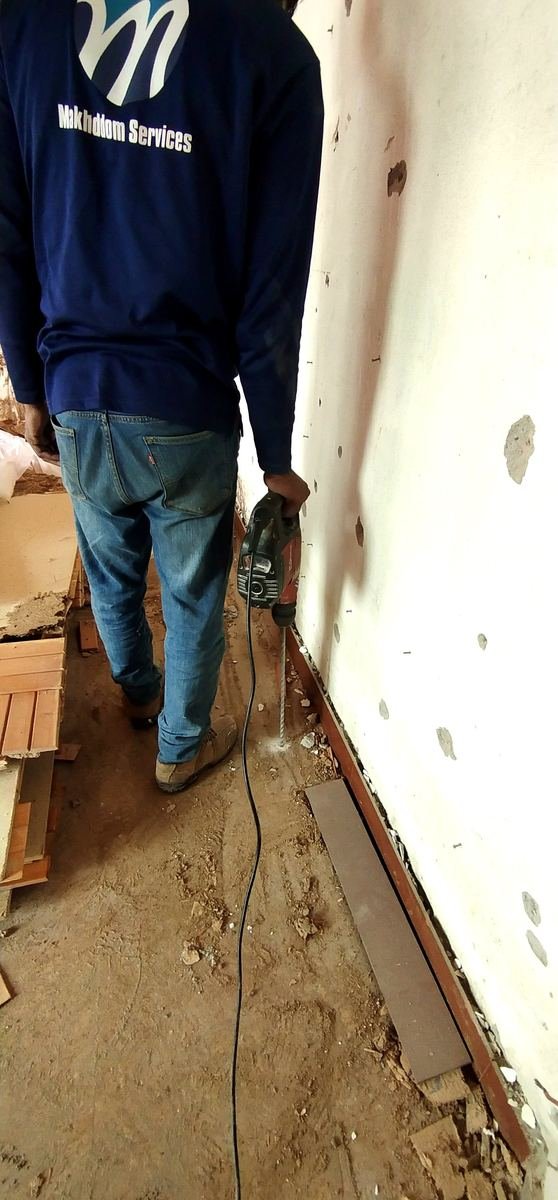
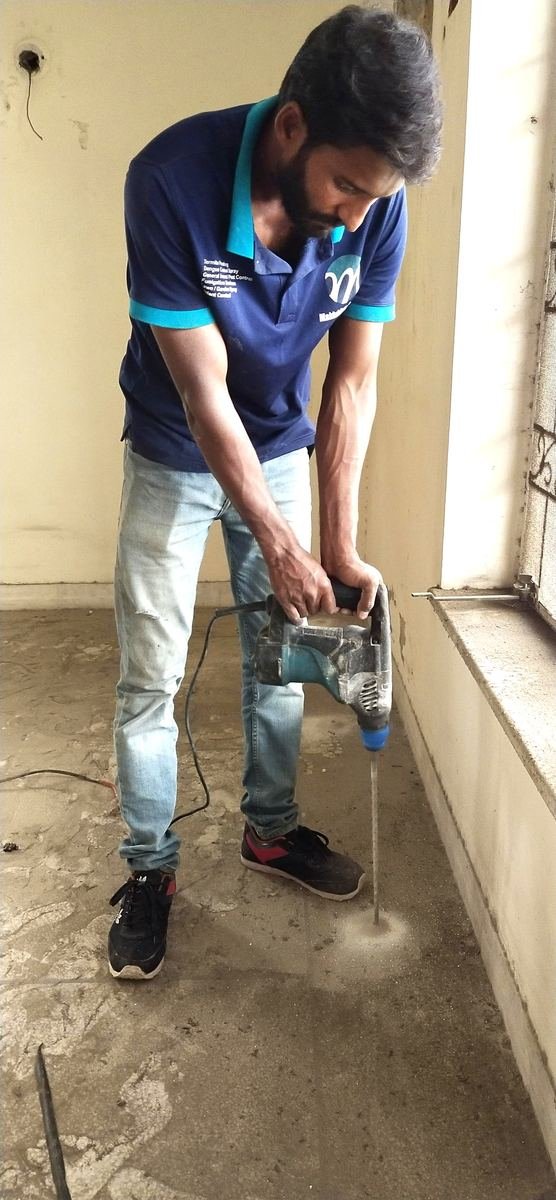
- Application matters as much as the product. Effective treatment requires trenching, drilling, or rodding around the entire foundation perimeter — not just spraying the spot where termites were seen.
- Dilution and coverage require training. Under- or over-diluting a termiticide, or missing key entry points, can leave large sections of a colony untreated and able to rebuild.
- Safety and compliance. Professional applicators are trained in correct personal protective equipment, application rates, and re-entry timing to keep the treatment both effective and safe for the household.
For an active or suspected infestation, a professional inspection and full perimeter treatment is almost always more cost-effective in the long run than repeated DIY attempts followed by structural repairs.
The Termite Treatment Process — What to Expect
When you book a professional termite treatment with Makhdoom Services, the process typically follows these stages:
- Inspection. A technician examines the property for mud tubes, damaged wood, moisture-prone areas, and likely termite entry points — both inside and around the foundation.
- Treatment planning. Based on the inspection, we identify whether a full perimeter soil treatment, localized wood treatment, or a combination approach is needed.
- Application. Termisol is diluted to the correct concentration and applied along the foundation, soil line, and identified entry points using professional spraying equipment, creating a continuous treated zone that termites cannot detect and avoid.
- Drying and re-entry. Treated areas are left to dry as per label guidelines before normal foot traffic resumes in that zone.
- Monitoring. Because the transfer effect takes time to work through a colony, some residual termite activity may be visible for a short period after treatment before die-off is complete. Follow-up inspections confirm the treatment is working.
Termite Prevention Tips for Monsoon Season
Treatment is most effective when paired with prevention. Ahead of and during monsoon season, when termite activity increases across Punjab, we recommend:
- Control moisture around your property. Fix leaking pipes, clear blocked drains, and make sure water doesn’t pool near your foundation — moisture is what draws subterranean termites toward a structure in the first place.
- Inspect wood and furniture regularly. Check door frames, window frames, skirting boards, and wooden furniture for the early signs described above, especially after heavy rain.
- Avoid direct wood-to-soil contact. Wooden fencing, stored firewood, or furniture legs sitting directly on soil create an easy bridge for termites into your property.
- Schedule preventive treatment before monsoon peaks. A pre-monsoon perimeter treatment is significantly cheaper than post-infestation structural repair, and gives the treated barrier time to establish before termite activity increases.
- Get an annual professional inspection. Even without visible signs, an annual check catches early activity before it becomes a structural problem.
Is Fipronil Safe for My Family and Pets?
This is one of the most common questions we receive, and it deserves an honest, evidence-based answer rather than a marketing one.
According to NPIC’s technical fact sheet, less than 1% of fipronil penetrates human skin even after 24 hours of contact, and it binds far more readily to insect nervous systems than to mammalian ones — which is the basis of its selective toxicity toward pests. Acute human exposure, which is rare with correctly applied professional treatments, has been associated with mild skin irritation on contact or, in cases of ingestion, symptoms like nausea and headache that typically resolve without long-term effects.
It’s worth noting transparently that the U.S. EPA classifies fipronil as a “possible human carcinogen,” a classification based on thyroid tumors observed in high-dose rodent studies — not on confirmed human cancer cases. Regulatory classifications like this are precautionary by design, which is exactly why professional application matters: correct dilution, targeted placement away from living and food-preparation areas, proper drying time before re-entry, and adherence to label instructions are what keep a fipronil-based treatment within its established safety margins for households and pets.
This is also why we recommend professional application over improvised DIY use — trained technicians apply the product at the concentrations and locations it was designed for, rather than guessing at dilution ratios.
Termite Treatment Cost in Lahore — What Affects Pricing
Termite treatment cost varies from property to property, and any company that quotes a fixed price without an inspection is likely underestimating your actual needs. The main factors that affect cost include:
- Property size and foundation perimeter — larger properties require more product and labor to treat the full perimeter.
- Severity and extent of infestation — an early-stage prevention treatment costs less than treating an established, spreading colony.
- Type of treatment required — soil perimeter treatment, wood injection, or a combination approach.
- Accessibility — properties with concrete slabs, tiled courtyards, or finished basements may require drilling, which affects labor time.
- Follow-up visits — ongoing monitoring adds value but also affect the overall package price.
The most accurate way to get a fair price is a free, no-obligation inspection, which lets our technicians assess your specific property before quoting.
Why Choose Makhdoom Services for Termite Treatment in Lahore & Punjab
Makhdoom Services has been protecting homes, offices, and industrial facilities across Punjab since 1982 — more than four decades of hands-on pest control experience. Our termite treatment program combines:
When you need reliable termite treatment in Lahore or anywhere in Punjab, here’s why homeowners and businesses choose Makhdoom Services:
- Trusted chemistry: We use Termisol, our Fipronil 2.5% EC termiticide, built on the same non-repellent, transfer-effect technology used by leading global termiticide brands.
- Trained technicians: Our team follows structured inspection, application, and monitoring protocols rather than one-size-fits-all spraying.
- Integrated Pest Management (IPM) approach: Termite control is paired with moisture control recommendations and prevention advice, not just chemical treatment.
- Broader facility services: Beyond termite and pest control, we also provide deep cleaning, industrial epoxy flooring, and waterproofing — services that directly support long-term termite and moisture prevention for your property.
- Local expertise: We understand Punjab’s climate, construction styles, and seasonal termite pressure because we’ve been treating properties here since 1982.
Termite Protection for Commercial and Industrial Properties
Termite risk isn’t limited to homes. Warehouses, factories, offices, and retail spaces across Punjab often contain even more timber, cardboard, and cellulose-based materials than a typical home — all attractive to subterranean termites, especially in facilities with wooden pallets, storage racking, or older structural timber.
For commercial and industrial clients, Makhdoom Services approaches termite treatment as part of a broader facility protection plan rather than a one-time spray. This typically includes a full-perimeter soil treatment around the building foundation, targeted treatment of loading docks and storage areas where wood-to-soil contact is common, and scheduled monitoring visits so that any new activity is caught before it affects inventory, structural timber, or fit-out materials. Because industrial downtime and inventory damage carry a much higher cost than residential repairs, we recommend a proactive annual contract rather than waiting for visible activity.
Common Myths About Termite Treatment
There’s a lot of inaccurate advice circulating about termite control, and some of it can genuinely delay effective treatment. A few worth addressing directly:
“If I don’t see termites, I don’t have them.” Subterranean termites forage underground and inside wall cavities. Visible activity, like a swarm of winged termites or a mud tube on an exterior wall, is usually a sign that a colony has already been established for some time — not an early warning.
“Household insect sprays will handle it.” General-purpose insect sprays are designed for surface-active pests and are repellent by nature. They may kill termites on contact but do nothing to reach or affect the underground colony, which will simply continue elsewhere.
“Once treated, I never need to check again.” Even a strong perimeter treatment with a non-repellent termiticide like Termisol has a finite effective lifespan that depends on soil conditions and construction. Annual inspections are what turn a one-time treatment into long-term protection.
“All termiticides work the same way.” As explained earlier, repellent and non-repellent chemistries behave very differently. A product a termite can detect and avoid will never reach the colony the way a non-repellent, transfer-effect product like Fipronil-based Termisol can.
Frequently Asked Questions About Termite Treatment
How long does professional termite treatment last? A properly applied perimeter treatment with a non-repellent termiticide like Termisol typically provides protection for several years, though the exact duration depends on soil conditions, construction type, and environmental factors. Annual inspections help confirm the treated barrier remains effective.
Can termites come back after treatment? Yes, it’s possible for new termite activity to develop from untreated areas or neighboring properties over time, which is why annual inspections and monitoring are recommended even after a successful treatment.
Is Termisol safe for children and pets once it has dried? Once applied correctly and allowed to dry per label instructions, treated areas are designed to be safe for normal household activity. As with any pesticide product, keeping children and pets away from treatment zones during application and the initial drying period is standard best practice.
What’s the difference between Termisol and repellent termiticides? Repellent termiticides create a barrier termites can sense and avoid, which often leaves colonies intact and searching for another entry point. Termisol, like other Fipronil-based non-repellent products, is undetectable to termites, allowing the transfer effect to spread through and reduce the entire colony rather than just blocking one entry point.
How often should I get my property inspected for termites? We recommend at least one professional inspection per year, ideally before monsoon season when termite activity increases across Punjab. Older properties, or those with a prior termite history, may benefit from more frequent checks.
Does termite treatment smell or stain surfaces? Fipronil-based EC formulations like Termisol are applied as a water-diluted solution and are designed to be low-odor once dry, with minimal risk to water-safe surfaces when applied by trained technicians following label guidelines.
Final Thoughts
Termites are one of the few pests that can cause serious structural and financial damage without ever announcing their presence until it’s too late. The good news is that modern, non-repellent termiticide technology — the same science behind global brands and behind Termisol — makes colony-wide elimination genuinely achievable when applied correctly by trained professionals.
If you’ve noticed mud tubes, hollow-sounding wood, discarded wings, or simply want to get ahead of monsoon season with a preventive inspection, Makhdoom Services is ready to help. With over 40 years of experience protecting homes and businesses across Lahore and Punjab, we combine trusted Fipronil-based treatment with the practical, on-the-ground expertise needed to keep your property termite-free.
Book a free termite inspection today: Call 0300-4188502 or visit makhdoomservices.com to learn more about our termite control and facility protection services.
Sources Referenced
- Fipronil Fact Sheet — National Pesticide Information Center (NPIC), a cooperative between Oregon State University and the U.S. Environmental Protection Agency
- Termidor SC Termiticide/Insecticide — BASF Pest Control, global manufacturer of fipronil-based termiticides
Termite Treatment Outside Lahore
We work beyond the city in Kasur, Faisalabad, Gujranwala, Sialkot, Gujrat and Jhelum. Termite treatment in Lahore and across Punjab follows the same method, though soil and building styles differ from city to city.
See termite control in Faisalabad and Gujranwala for local details.