A leak that appears after heavy rain needs fast action. For post monsoon roof leak quick repair Lahore homeowners can take a few steps the same day, and we explain which jobs need a waterproofing crew.
Monsoon season leaves its mark on Lahore’s rooftops every year. Once the rains stop, many homeowners notice a damp patch on the ceiling, a hairline crack that has started weeping, or paint bubbling on an upper-floor wall — all signs that water found a way in during the season and is still drying out, or worse, still finding a path through.
Fixing it quickly, correctly, matters more than fixing it fast and sloppily. This guide walks through what to check right after monsoon, what counts as a genuine quick-fix, and when the problem needs a full waterproofing treatment rather than a patch.
Why Post-Monsoon Is the Right Time to Act
During the monsoon itself, a leaking roof is at its most active — water is entering and there’s little point sealing a surface that’s still saturated. The weeks right after the rains stop are actually the best window: the roof has had a chance to dry, cracks and weak points are still visible from staining, and the surface is dry enough for a coating or membrane to bond properly. Waiting until next summer means the damage has months to spread quietly through the slab.
First, Confirm Where the Water Is Actually Coming From
A stain on the ceiling doesn’t always sit directly below the leak — water often travels sideways along a beam or a slope in the slab before it drips. Before any repair, trace the stain back on the roof itself: look for hairline cracks, pooling marks (a slightly discoloured patch where water was sitting), gaps around a water tank base, parapet wall joints, and old pipe or cable penetrations. These four spots — cracks, low points where water pools, parapet joints, and pipe collars — account for the vast majority of monsoon leaks on Lahore’s flat concrete roofs.
What Counts as a Genuine Quick Repair
Not every leak needs a full re-membrane. If the damage is limited to a single crack or a small area around a pipe, a targeted repair can hold for the rest of the dry season:
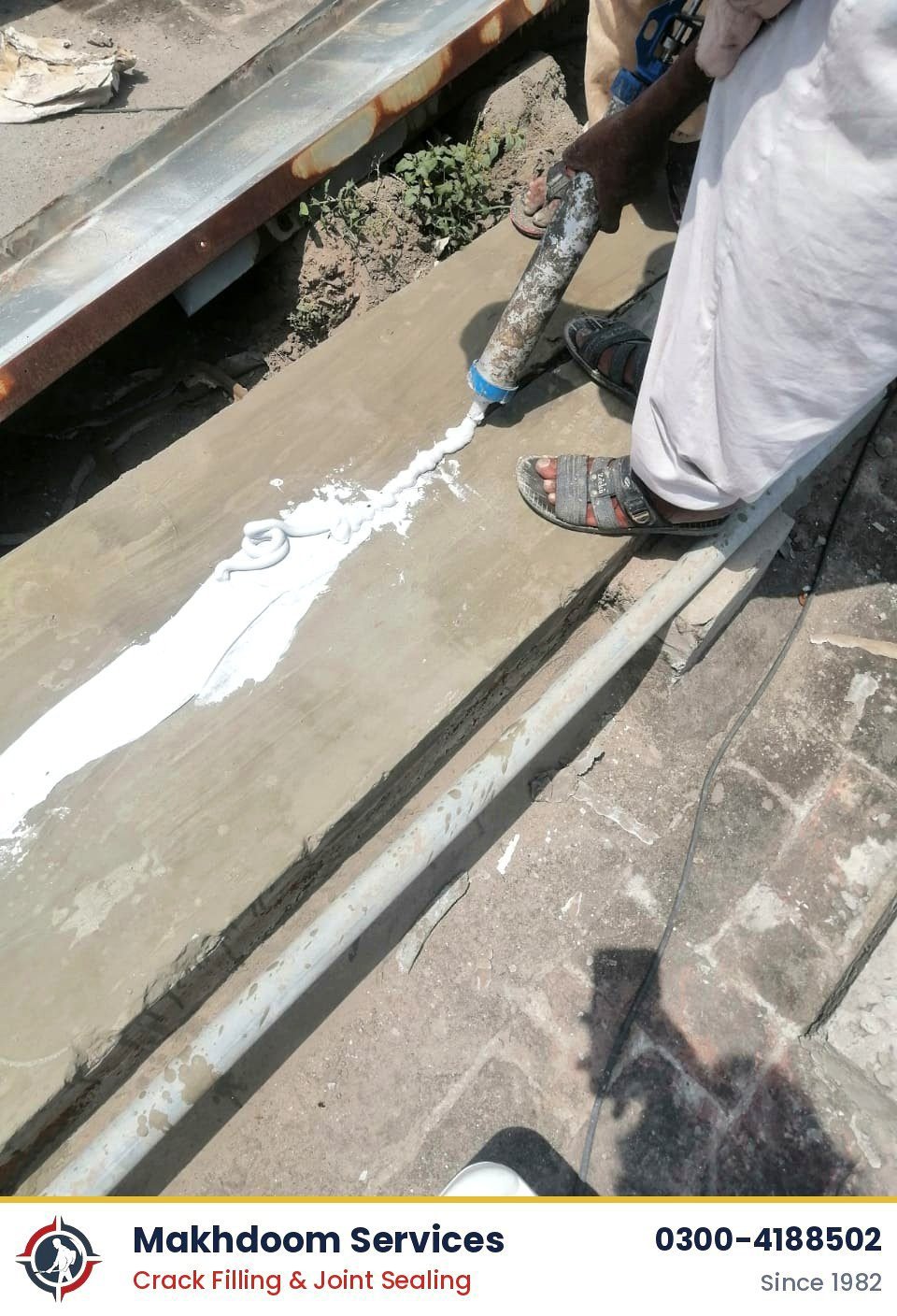
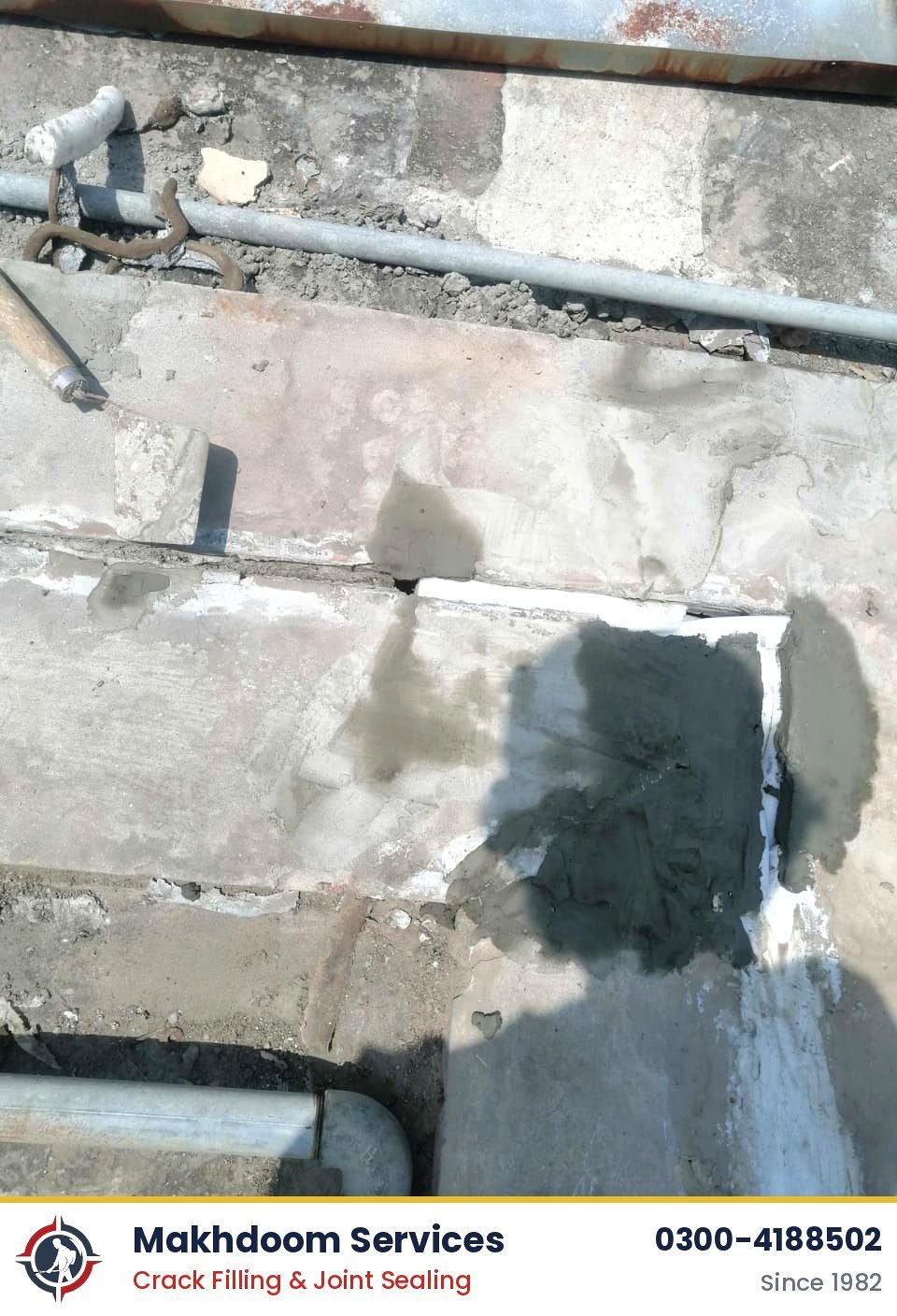
- Crack filling: the crack is opened slightly, cleaned of loose material, and filled with a flexible sealant (for cracks that move with temperature) or a cementitious filler (for static cracks) before the surface is resealed.
- Spot coating: a polyurethane or bitumen-based coating applied to the specific weak patch, extending a foot or two beyond the visible damage in every direction.
- Pipe and tank-base collars: the gap where a pipe or water tank stand meets the roof is one of the most common leak points and is usually resealed with a flexible sealant rather than a rigid one, since this joint moves slightly over time.
These targeted fixes are genuinely quick — often completed within a few hours once the roof is dry and accessible.
When a Quick Fix Isn’t Enough
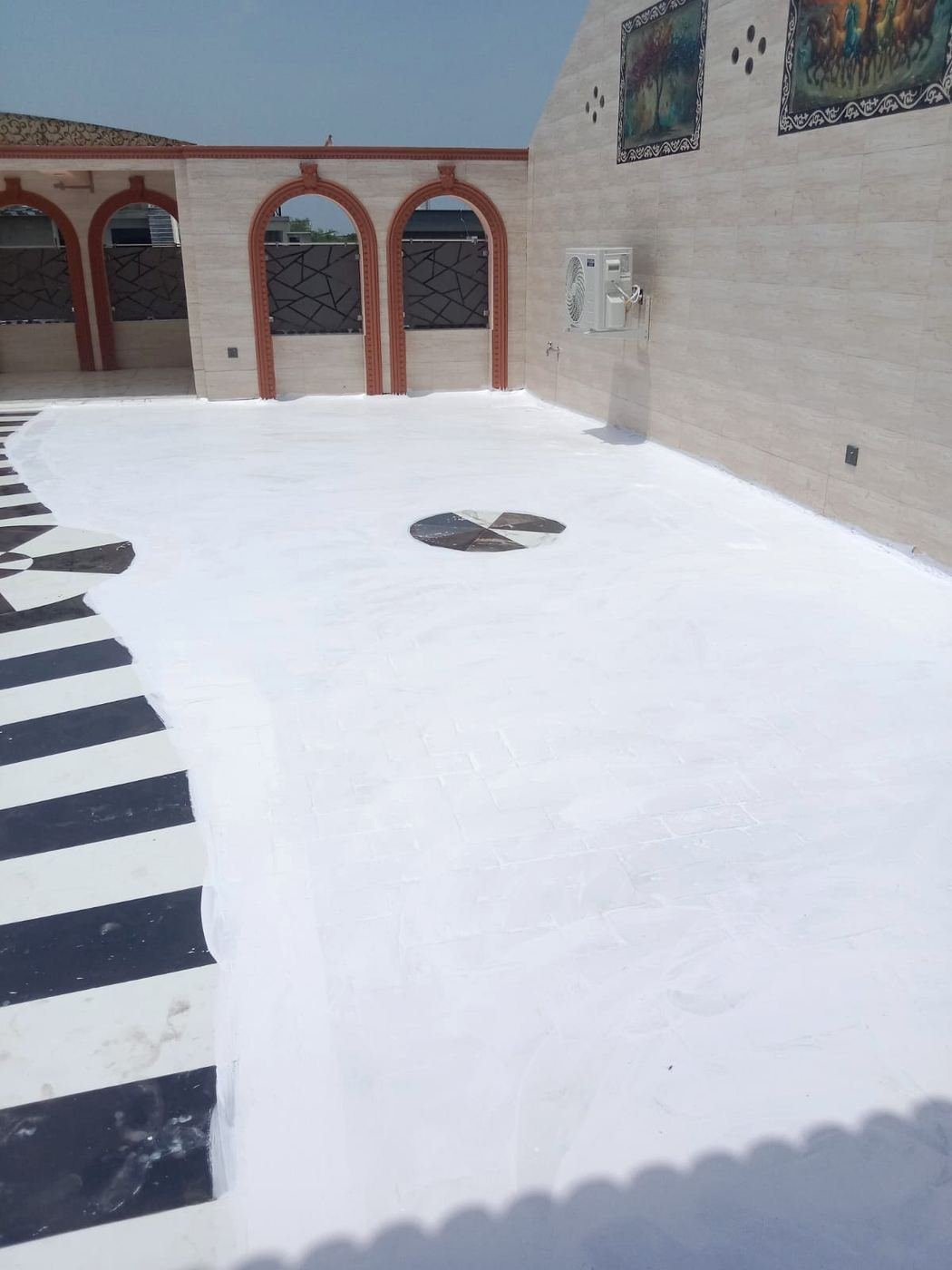
If the staining covers a large area, if the leak reappears in a new spot each monsoon, or if this is the second or third season the same room has been affected, the underlying waterproofing layer has likely failed more broadly than one crack. In that case, patching one spot just delays the same conversation next year. A full roof waterproofing treatment — cleaning, crack repair across the whole surface, primer, and two to three layers of bitumen membrane or polyurethane coating with heat-welded joints — resets the roof’s protection rather than chasing individual leaks one season at a time.
A Simple Test Before You Call Anyone
On a dry day, sweep the roof clean and pour a bucket of water slowly over the suspect area, watching the ceiling below over the next hour. If a stain reappears or darkens, you’ve confirmed the leak’s rough location and that it’s active — useful information to share with whoever inspects the roof, and a check that costs nothing but a bucket of water.
Frequently Asked Questions
Can roof waterproofing be done right after monsoon, or should I wait?
Right after monsoon is ideal, as long as the roof surface has fully dried — coatings and membranes need a dry substrate to bond properly. Waiting until next summer only gives moisture more time to spread through the slab.
How long does a spot repair typically last?
A well-done spot repair on a genuinely isolated crack can hold for a few years, but it is not a substitute for full roof waterproofing if the membrane underneath has failed across a wider area.
Is a site visit needed to diagnose the leak?
Yes — tracing a leak accurately almost always needs an on-site inspection of both the roof and the affected ceiling, since water frequently travels before it drips. We quote after an on-site inspection. Site visit: Rs 2,000, refunded/adjusted if you book the job with us.
Temporary Fixes vs Lasting Repairs
Sealing a crack with cement or putting plastic sheet over a roof can stop water for a few days. A post monsoon roof leak quick repair in Lahore buys time, but the roof should be properly waterproofed before the next heavy rain.
See our roof waterproofing methods guide or book waterproofing.
Get Your Roof Checked Before the Next Rain
Whether it’s one stubborn crack or a ceiling that stains every monsoon, Makhdoom Services provides professional roof waterproofing in Lahore with careful, quality-checked workmanship, backed by over four decades of experience since 1982. If the same roof also runs hot in summer, ask about our heatproofing services — many clients combine both treatments in a single visit. Get in touch to book a site assessment.
WhatsApp us for a quick quote or call 0300-4188502 We quote after an on-site inspection. Site visit: Rs 2,000, refunded/adjusted if you book the job with us.