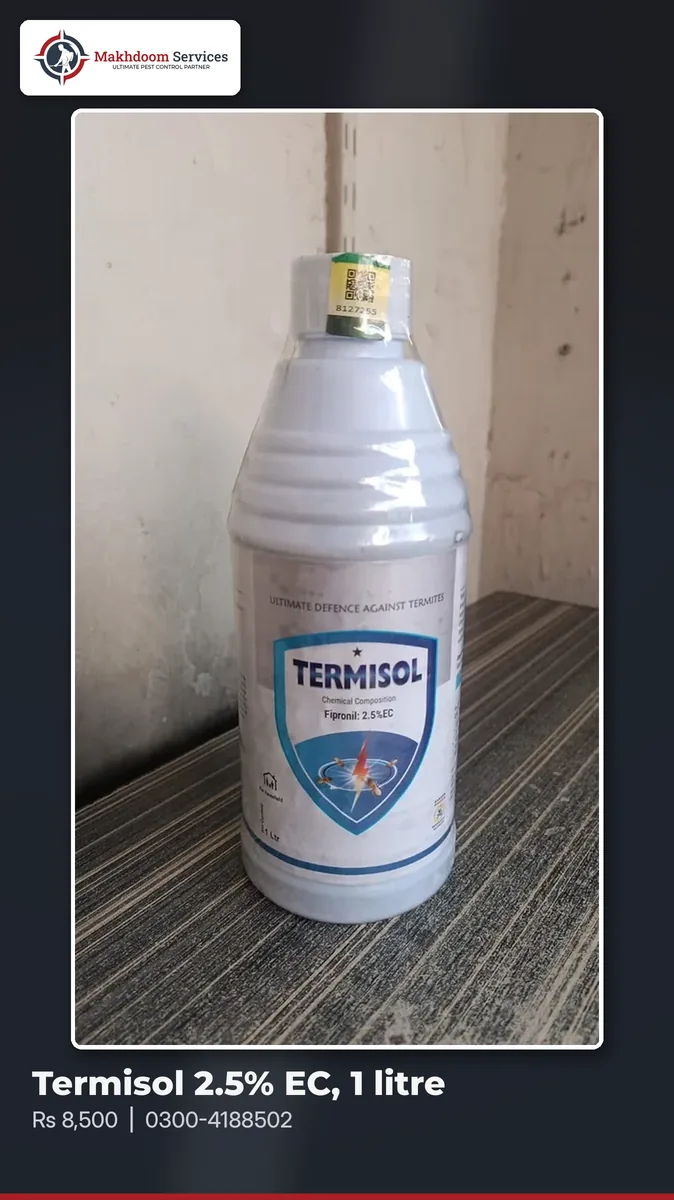
Short answer: Termite treatment at home works when you place a continuous chemical barrier in the soil and wood that deemak uses to reach the building. Termisol 2.5% EC (1 litre, Rs 8,500) contains fipronil, a non-repellent termiticide: termites cannot sense it, carry it back and pass it through the colony. Mix 1 litre with 250 litres of water to treat about 540 sq ft, inject it along walls and treat affected wood.
Need help now? Call 0300-4188502 (Mon to Sat, 10 AM to 8 PM).
Before You Start Termite Treatment at Home
Subterranean termites, called deemak, live in the soil under and around the building. They climb into the structure through tiny cracks in the floor, expansion joints, plumbing entries and wall bases, often building pencil-thin mud tubes to stay hidden. Inside, they eat door frames, skirting, cupboards, wooden flooring and even paper and books.
Termite treatment at home starts with understanding this route. Damage is usually discovered late because the outer surface of the wood stays intact. Tap a door frame with a screwdriver handle: a hollow, papery sound is a warning sign.
Signs You Need Termite Treatment at Home
- Mud tubes running up walls, along skirting or behind cupboards.
- Hollow-sounding or soft door frames, window frames and cupboard bases.
- Tiny holes in wood with fine soil packed around them.
- Swarms of winged termites near lights after rain, followed by discarded wings on window sills.
- Blistered or bubbling paint on walls near the floor.
For more detail, read our guide to the signs of termite infestation.
What Is Termisol 2.5% EC?
Termisol is a termiticide concentrate with fipronil 2.5% as the active ingredient, from the phenyl pyrazole chemical group. It works through ingestion, contact and transfer. Because it is non-repellent, foraging termites walk through treated soil without avoiding it and spread the active ingredient to nest mates, which is how the colony is reduced rather than simply pushed to another wall.
| Detail | Termisol 2.5% EC |
|---|---|
| Pack size | 1 litre |
| Price | Rs 8,500 per litre |
| Active ingredient | Fipronil 2.5% EC |
| Action | Non-repellent; ingestion, contact and transfer |
| Dilution | 1 litre in 250 litres of water |
| Coverage | About 540 sq ft of soil per litre |
| Uses | Pre-construction soil, post-construction drilling, wood and wood borers |
| Delivery | Across Pakistan |
For termite treatment at home, buy it from the Termisol 2.5% EC product page and read the full Termisol safety data sheet (MSDS) before use.
Tools for Termite Treatment at Home
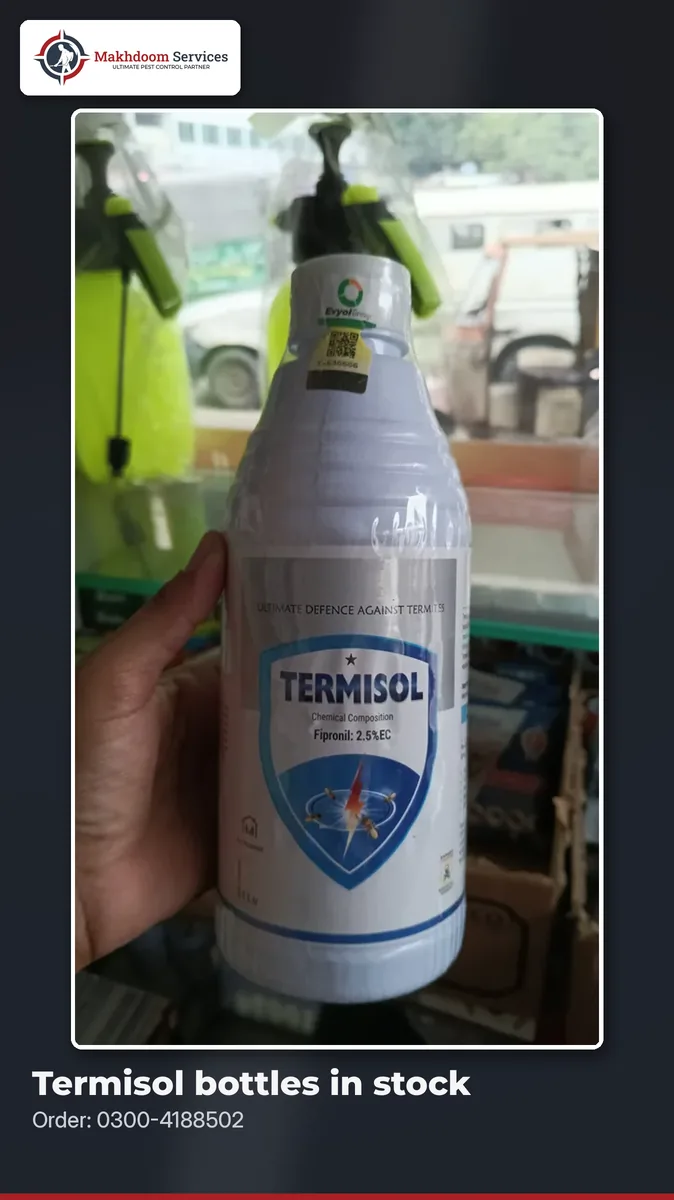
- Termisol 2.5% EC and a large plastic drum or several marked buckets for mixing.
- Hand pump sprayer or low-pressure injector with a long nozzle.
- Electric drill with a 10 to 12 mm masonry bit for floor holes.
- White cement or tile grout to seal drilled holes.
- Chemical-resistant gloves, goggles, a face mask, long sleeves and closed shoes.
8-Step Guide to Termite Treatment at Home
Step 1: Map the activity
Good termite treatment at home depends on knowing exactly where the termites are. Walk every room and the outside walls. Mark mud tubes, damaged wood and the wall lines nearest to them. Measure the length of affected walls so you can estimate how much mix you need.
Step 2: Clear and protect the area
Move furniture, cupboards and boxes at least half a metre from treated walls. Empty affected cupboards. Cover water tanks, underground tank lids, fish ponds and plant pots near the work area.
Step 3: Mix the solution correctly
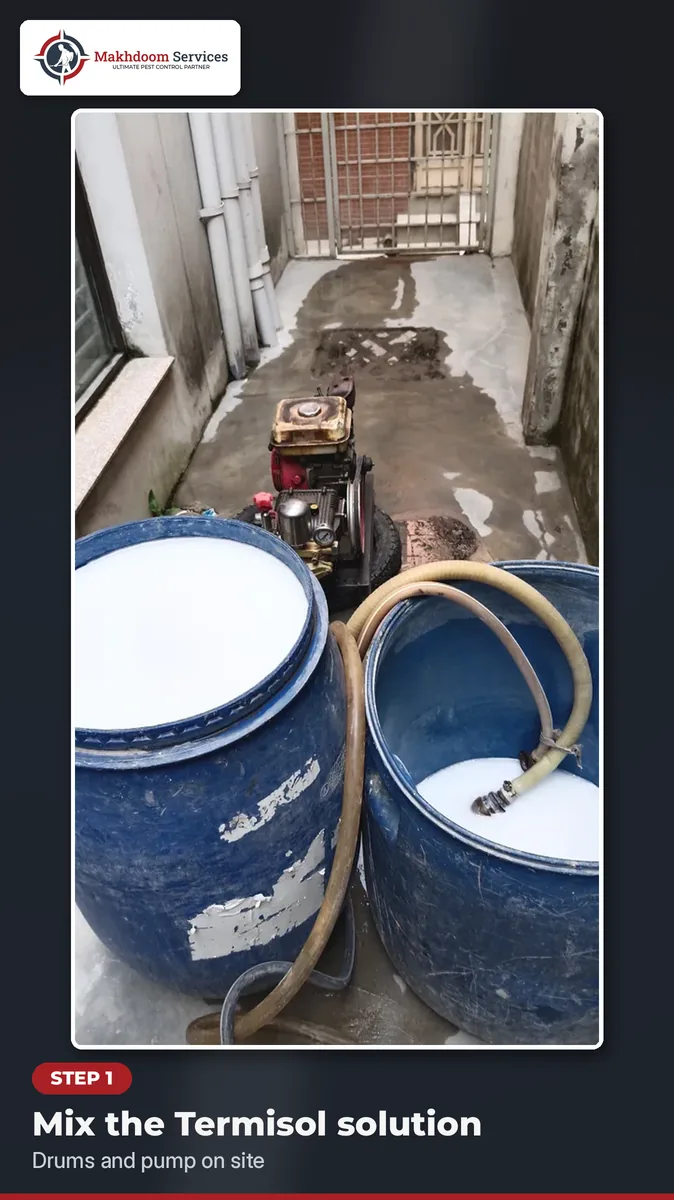
The most common mistake in termite treatment at home is the wrong mix. Follow the label ratio of 1 litre Termisol to 250 litres of water, which covers about 540 sq ft. For a smaller job, keep the same ratio: 100 ml in 25 litres of water treats roughly 54 sq ft. Add the concentrate to water, not water to concentrate, and stir well. Do not make the mix stronger; extra strength does not improve results.
Step 4: Drill along the wall-floor junction
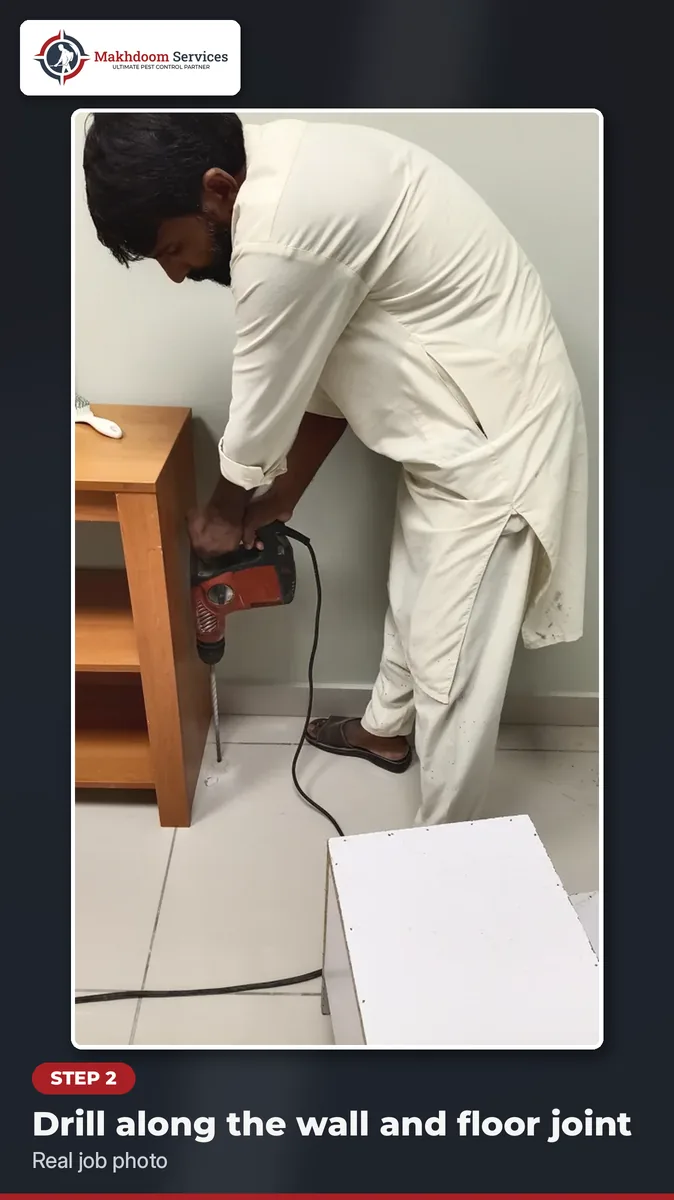
Inside the house, drill holes through the floor about 15 to 20 cm from the wall, spaced about 30 cm apart, deep enough to reach the soil below the floor. Avoid marked water, gas and electrical lines; if you are unsure where they run, stop and call a professional.
Step 5: Inject the solution
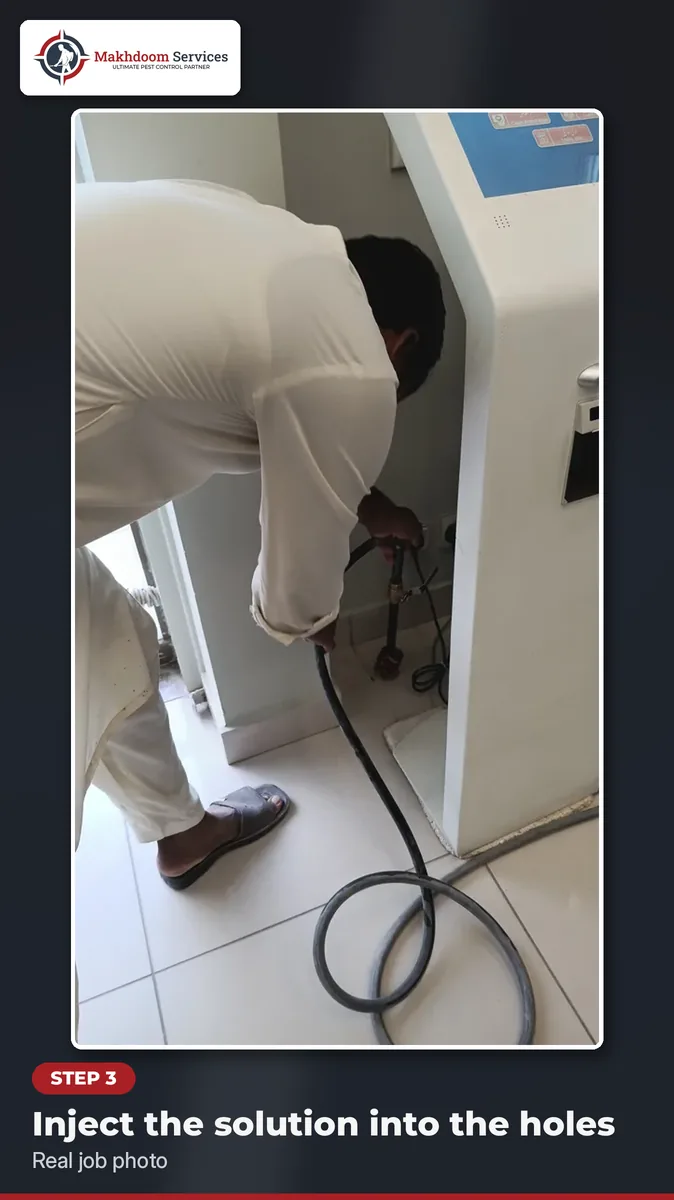
Inject the mix slowly into each hole until it stops soaking in, so the soil under the floor forms a continuous band. Pay extra attention to corners, door frames, kitchen and bathroom pipe entries and expansion joints.
Step 6: Treat the outside perimeter
Termite treatment at home must cover the outside as well as the inside. Where the house has open soil around it, dig a shallow trench along the outer wall base, apply the mix into the trench and backfill the treated soil. This closes the outer route termites use to reach the walls.
Step 7: Treat affected wood
Wood treatment is the visible part of termite treatment at home. Remove mud tubes, then brush or spray the mix onto affected door frames, skirting and cupboard backs, and inject into existing termite holes. Badly damaged wood should be replaced after treatment.
Step 8: Seal and monitor
Termite treatment at home is not finished on the day you inject. Seal drilled holes with white cement or grout so the floor looks neat. Check the marked spots every month for three months. New mud tubes usually mean a gap in the barrier that needs a touch-up.
Safety Precautions
Termite treatment at home uses a termiticide, which is stronger than household sprays and needs more care. Fipronil is highly toxic to fish and bees, so protect water sources.
- Read the label and MSDS before opening the bottle.
- Wear chemical-resistant gloves, goggles, a mask, long sleeves and closed shoes throughout mixing and injection.
- Keep children, pets and birds away from the work area until treated surfaces are dry and the room is ventilated.
- Never apply near wells, bores, underground or overhead water tanks, fish ponds or drains that lead to open water.
- Do not eat, drink or smoke while working; wash hands, face and clothes after the job.
- If the concentrate touches skin or eyes, rinse with plenty of clean water. If swallowed, do not induce vomiting; seek medical help immediately and show the label.
- Store the bottle locked, upright and away from food, animal feed and children. Rinse empty containers three times, use the rinse water in the mix and do not reuse the bottle.
Home Treatment or Professional Treatment?
| Situation | Termite treatment at home | Professional treatment |
|---|---|---|
| One room or a few door frames | Suitable with care | Optional |
| Activity in several rooms or floors | Hard to treat fully | Recommended |
| New house at foundation stage | Not recommended | Recommended |
| Hidden pipes or wiring in floors | Risky | Recommended |
| Written warranty | Not included | 10 years pre-construction, 5 years post-construction |
Termite treatment at home with Termisol bought for your own use does not carry a warranty, because the result depends on how it is applied. When our team does the treatment, you get a written warranty of 10 years for pre-construction and 5 years for post-construction work, with free re-treatment of the affected area if termites return during that period.
See our termite control service in Lahore, termite control in Islamabad, termite control in Rawalpindi and pre-construction termite treatment. We provide termite treatment across Pakistan. The inspection visit charge is Rs 2,000, refunded or adjusted if you book the treatment.
Related Guides
We hope this termite treatment at home guide helps you protect your house. Pest problems rarely come alone. Read how to get rid of bed bugs with Bug Off and how to get rid of cockroaches with Roach Out. For an independent overview of termite biology, see the University of California IPM pest notes on termites.
Frequently Asked Questions
Can I do termite treatment at home with Termisol?
Yes, for limited activity such as one room or a few door frames. Follow the label dilution, drill and inject along the affected walls and treat the wood. Larger or hidden infestations are better handled by a professional team.
How much area does 1 litre of Termisol cover?
Mixed with 250 litres of water as the label directs, 1 litre of Termisol 2.5% EC treats about 540 sq ft of soil.
How does Termisol kill the termite colony?
Fipronil is non-repellent, so termites do not avoid treated soil. They pick it up by contact and feeding and pass it to other termites, which spreads the effect through the colony.
Is Termisol safe for children and pets?
Keep children and pets away while you work and until treated areas are dry and ventilated. Seal drilled holes, never apply near water tanks or fish ponds, and store the bottle locked away.
Does home use of Termisol come with a warranty?
No. The warranty applies only to professional treatment by our team: 10 years for pre-construction and 5 years for post-construction, with free re-treatment of the affected area.
How long before I see results?
Mud tube activity usually falls within a few weeks as the active ingredient moves through the colony. Check the treated spots monthly for three months and touch up any new tubes.
Can Termisol be used on wood borers?
Yes. The product profile lists wood termites and wood borers among its uses; brush or inject the mix into affected wood and replace pieces that are badly damaged.
Need the job done properly, with a written warranty?
Call Makhdoom Services on 0300-4188502 to book an inspection. Phone lines are open Monday to Saturday, 10 AM to 8 PM (closed Sunday). The professional visit charge is Rs 2,000, refunded or adjusted if you book the treatment.